
Home Sweet Home! Scientists Find America’s Oldest House — and It’s 13,800 Years Old
Quick Summary
Archaeologists digging in Alaska have found what may be the oldest home ever discovered in the entire Western Hemisphere. The site is about 13,800 years old — that is older than the pyramids of Egypt by more than 9,000 years! Along with the remains of a shelter, they found bone needles, stone tools, and clues about ancient dogs.
What Happened?
A research team led by scientists from the University of Kansas spent more than a decade carefully digging at a site in interior Alaska, near the city of Fairbanks. The site is called Shégˊ Xdaltthˊíˊ, which means “They Were There” in the Alaska Native Athabascan language. The name is very fitting!
Over the years, the team dug up more than 80,000 objects. That is enough artifacts to fill many large boxes — a truly enormous treasure trove from the past.
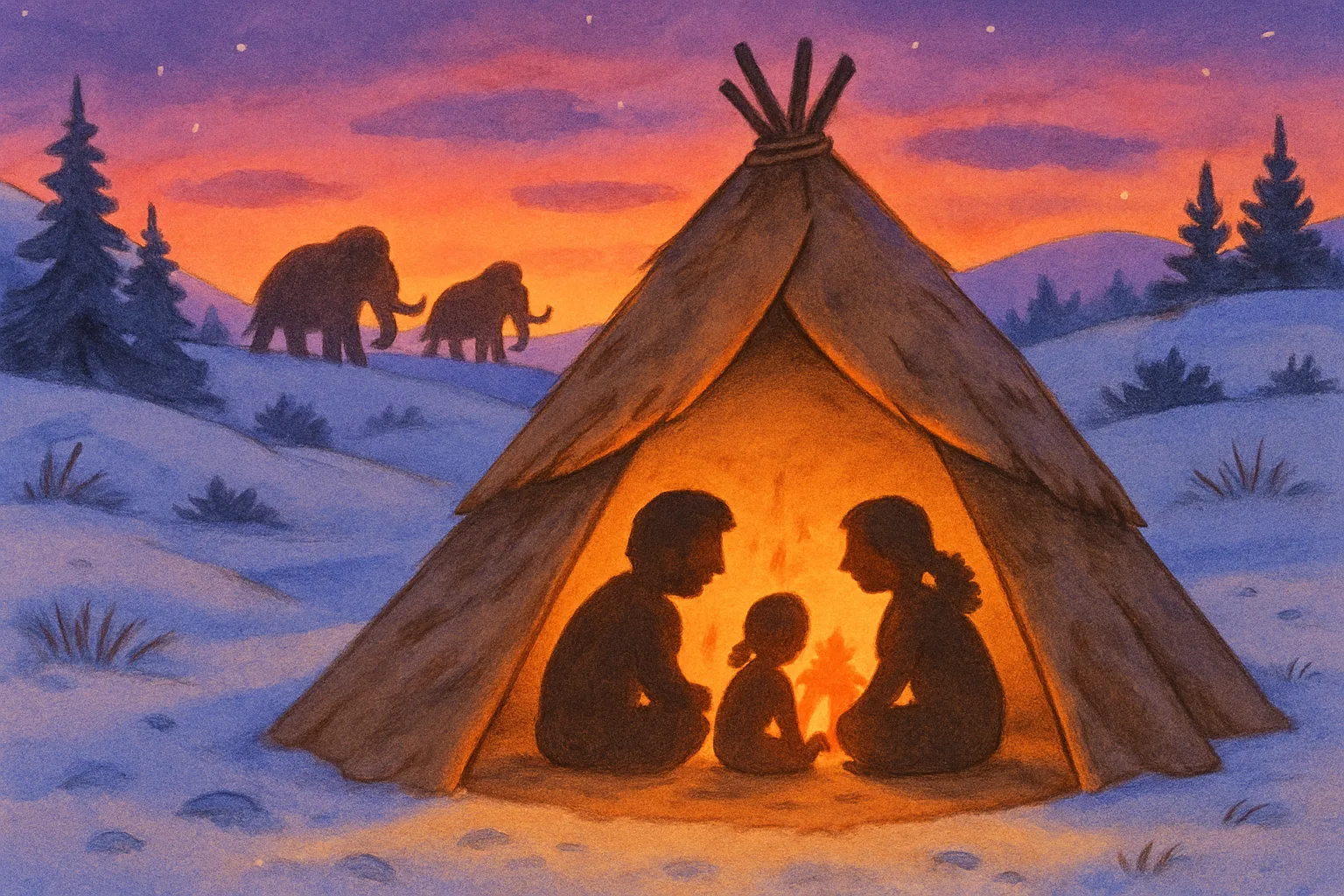
The most exciting discovery is evidence of a shelter. Researchers found a fireplace, a small pit, and the mark in the ground where a wooden post once stood. Together, these suggest that ancient people built some kind of tent or roof structure here. It may have looked a bit like a lean-to or a simple tent.
Nearby, they also found an earth oven. It still contained charcoal and animal bones, probably from a meal of bison meat cooked slowly for a whole family.
The team also found small fragments of bone needles — the oldest ever found in the Western Hemisphere. Ancient people used needles like these to sew clothing and shelters from animal skins, which was incredibly important for surviving freezing temperatures.
Stone tools discovered at the site have a distinctive diamond shape. Very similar tools have been found all the way over in northern Siberia, Russia. This shows that the people living here were connected to communities on the other side of what was once a great land bridge — called Beringia — that linked Asia and North America during the Ice Age.
Why Does It Matter?
This discovery helps us understand the very first people to live in the Americas. These were not just travelers passing through. The camp was used off and on for more than a thousand years. That means families came back again and again — this was truly their home territory.
The discovery was published in the science journal Science Advances, one of the world’s most respected science publications. It adds a vivid new chapter to the story of how humans first spread across the planet.
Big Words
- Archaeologist — a scientist who studies the past by carefully digging up old objects and buildings left behind by ancient people
- Artifact — any object made or used by humans in the past, like a tool, needle, or pottery piece
- Beringia — the ancient land bridge that once connected northeast Asia to northwest North America during the Ice Age, when sea levels were much lower
- Ice Age — a long cold period in Earth’s history when thick sheets of ice called glaciers covered large parts of the land
- Hearth — a fireplace or fire pit used for cooking and warmth
Fun Fact
The bone needle fragments found at this site are the oldest in all of North and South America. Needles this ancient tell scientists that people already had the skill to sew warm clothing — without that ability, surviving an Alaskan winter would have been almost impossible!
Think About It
If you had to build a shelter using only materials you could find in nature — sticks, stones, animal skins — what would your shelter look like?
Sources
- LiveScience — Archaeologists discover the oldest dwelling in the Western Hemisphere at a 13,800-year-old site in Alaska
- HeritageDaily — 13,800-year-old base camp reveals life among Alaska’s earliest inhabitants
- Gizmodo — Thousands of Artifacts Unearthed in Alaska Hint at an Even Older Human Presence in the Americas
- Ancient Origins — 13,800-Year-Old Beringian Camp Reveals Ice Age Life
- Science Advances (journal) — Highlights from an early base camp in Beringia 13,800 years ago