
Mark Your Calendar! An ‘Almost Blood Moon’ Is Coming at the End of August
Quick Summary
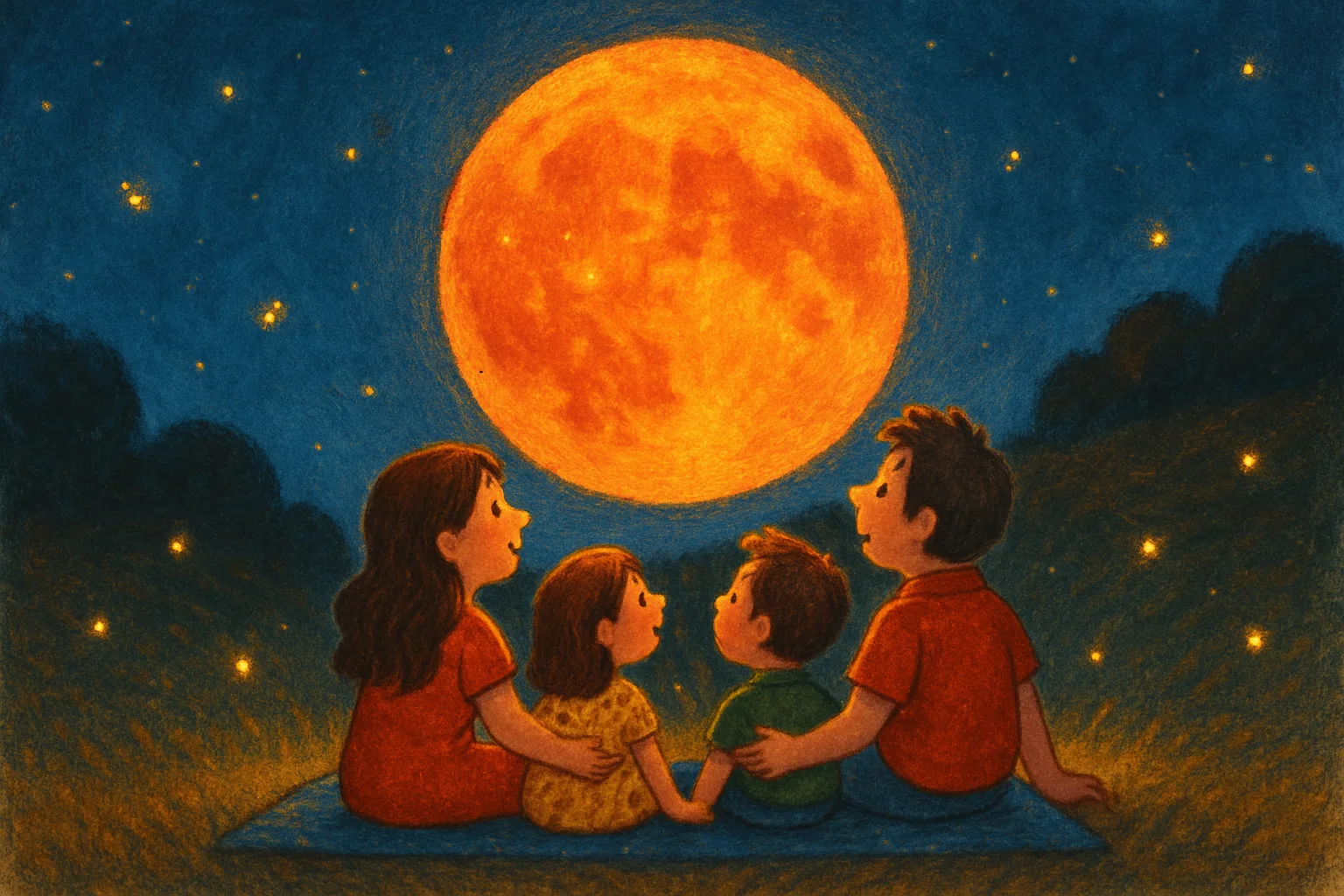
Get ready, skywatchers! On the night of August 27 going into August 28, a spectacular lunar eclipse will make the Moon glow deep reddish-orange. Almost the entire Moon — 96% of it — will pass into Earth’s shadow. It will be the best lunar eclipse visible from much of the world until New Year’s Eve 2028!
What Happened?
Astronomers and skywatching experts are buzzing with excitement about an upcoming lunar eclipse. On the night of August 27 to 28, 2026, Earth will move between the Sun and the full Moon. When this happens, Earth’s shadow falls across the Moon’s surface.
At its peak, 96% of the Moon will be inside Earth’s darkest shadow — the part called the umbra. That’s like putting 96 out of 100 tiles of a floor into the shade, leaving only a tiny sliver in sunlight. The Moon will dim and turn a beautiful deep reddish-orange color.
This type of eclipse is called a deep partial lunar eclipse. It’s not quite a true “blood moon” — that term is reserved for a total eclipse, when 100% of the Moon is covered. But at its most dramatic moment, it will look almost exactly like one! The entire eclipse, from start to finish, will last 5 hours and 38 minutes.
The good news? People in North America, South America, Europe, and Africa will all be able to see it. And the best news of all? You don’t need any special equipment. No telescope, no eclipse glasses — just your own eyes, a clear sky, and a good look at the Moon!
August is shaping up to be an amazing month for sky-watchers. Just two weeks before the eclipse, on August 12, a total solar eclipse will sweep across Spain. And the Roman Space Telescope launches on August 30. It’s a sky-packed month!
Why Does It Matter?
Lunar eclipses are one of nature’s greatest free shows. For thousands of years — long before telescopes existed — people all over the world looked up at the Moon and wondered why it sometimes turned red. Now we know the science behind it, and we can predict eclipses years in advance.
Watching an eclipse is also a wonderful way to connect with astronomy in your own backyard. No special gear needed. This will be the best lunar eclipse anywhere on Earth until December 31, 2028, so it is definitely worth staying up a little late to see!
Big Words
- Lunar eclipse — when Earth moves between the Sun and the Moon, causing Earth’s shadow to fall across the Moon’s surface
- Umbra — the darkest, innermost part of a shadow; when the Moon passes through Earth’s umbra, it turns reddish-orange
- Partial eclipse — when only part of the Moon (not all of it) passes through Earth’s darkest shadow
- Deep partial eclipse — a partial eclipse where most of the Moon — in this case 96% — is inside Earth’s shadow, making it look almost like a total eclipse
- Penumbra — the lighter, outer region of a shadow; the Moon enters the penumbra before and after the partial phase, when it only dims slightly
Fun Fact
The Moon turns reddish-orange during an eclipse because of Earth’s atmosphere! Sunlight bends around the edges of Earth and gets filtered through the atmosphere — which removes blue light but lets red light through. So the Moon is actually lit by every sunrise and sunset happening on Earth at once!
Think About It
Imagine you are standing on the Moon during a lunar eclipse. What do you think the Sun would look like from there, and why?
Sources
- Space.com — An ‘almost blood moon’ is coming on Aug. 27 and it’ll be the best lunar eclipse until NYE 2028
- BBC Sky at Night Magazine — Get ready for a solar eclipse, a Blood Moon and shooting stars all in the same month
- TimeandDate.com — Your Moon Guide for August 2026