
Built-In GPS! Scientists Find the Oldest Animal Navigation System Ever
Quick Summary
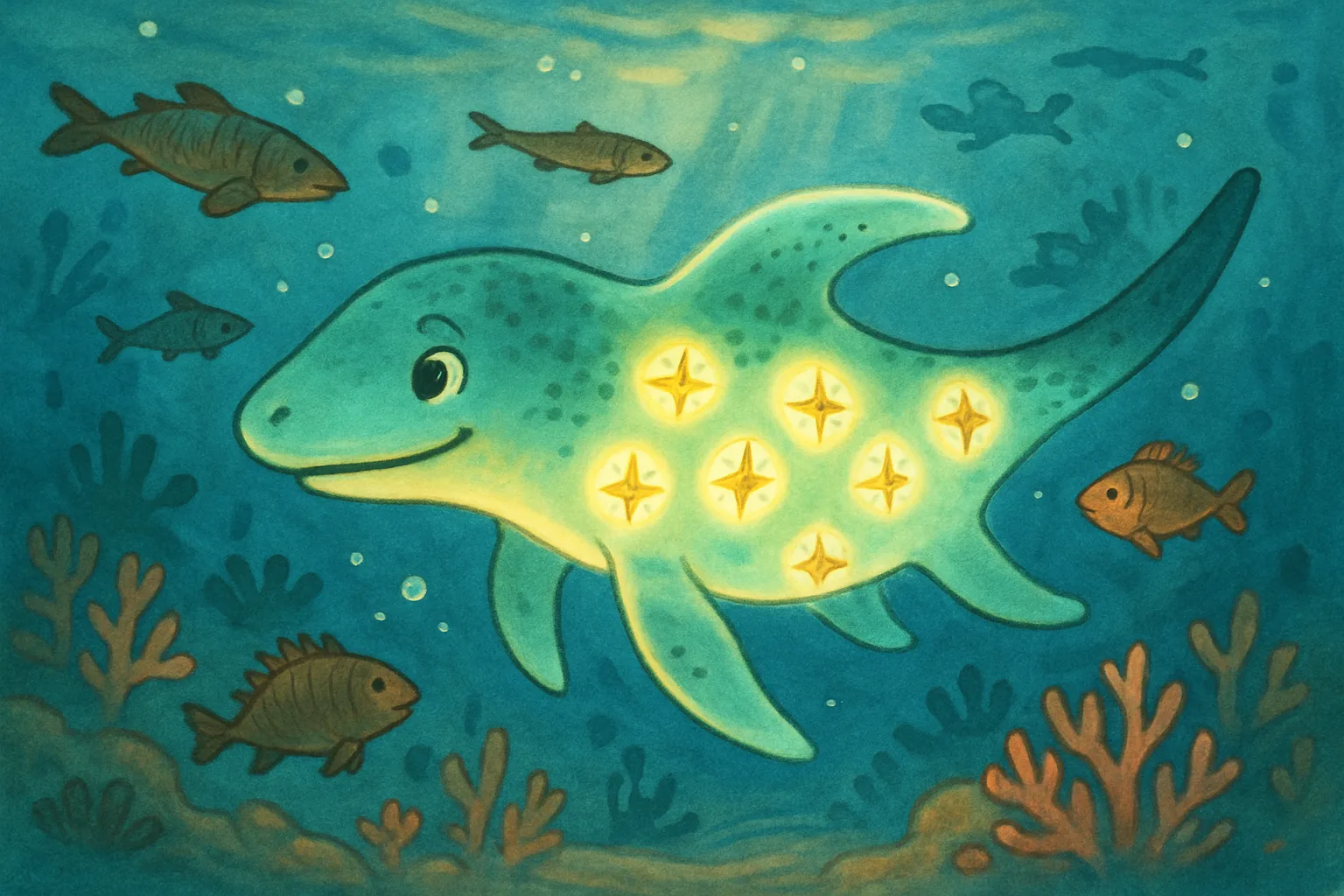
Scientists have discovered tiny magnetic fossils that are 97 million years old. The fossils show that some ancient mystery creature could navigate the ocean using Earth’s magnetic field — just like a built-in GPS. It is the oldest evidence of this ability ever found in an animal.
What Happened?
You probably use Google Maps or a GPS device to find your way around. But did you know some animals have their own built-in compass? Birds, sea turtles, and fish can sense Earth’s magnetic field to know which way to go. Scientists call this ability magnetoreception.
Now, researchers from the University of Cambridge have found evidence that animals were doing this 97 million years ago — back when dinosaurs roamed the Earth.
The clues came from tiny fossils found buried in ancient seafloor sediments. These fossils are called magnetofossils. Each one is tinier than a single bacterial cell — so small you could fit thousands of them on the tip of a pencil. They come in shapes like spearheads, spindles, bullets, and tiny needles.
For a long time, scientists knew these structures existed but had no idea what they did. Now, using a special 3D scanning method — sort of like a magnetic version of the CT scans doctors use — researchers found something remarkable. The magnetic structure inside each fossil was arranged in a swirling vortex pattern, like a tiny tornado. That pattern is perfect for detecting both the direction and strength of Earth’s magnetic field.
In other words, the mystery creature that made these fossils most likely had a built-in compass. It could read Earth’s magnetic field like a map and navigate thousands of kilometers across the ancient ocean.
Scientists do not yet know exactly what kind of animal created the fossils. But whatever it was, it was a very good navigator!
Why Does It Matter?
This discovery pushes back the history of animal navigation by millions of years. It also helps scientists understand how modern animals — like the birds and fish we see today — evolved the ability to find their way across huge distances.
It shows that nature has been solving tricky problems for a very, very long time. And there is still so much we have not yet discovered buried in the ancient seafloor.
Big Words
- Magnetofossil — a tiny fossil made of magnetic minerals left behind by an ancient organism.
- Magnetoreception — the ability to sense Earth’s magnetic field and use it for navigation.
- Vortex — a spinning, swirling pattern, like a tiny tornado or a whirlpool.
- Sediment — layers of sand, mud, or tiny particles that settle on the bottom of the ocean over millions of years.
- Paleontology — the scientific study of ancient life through fossils.
Fun Fact
Homing pigeons are famous for flying hundreds of miles back to their loft using Earth’s magnetic field — a skill that scientists think may have ancient roots just like these 97-million-year-old fossils suggest!
Think About It
If you had a built-in magnetic compass like this ancient creature, where would you navigate to first?
Sources
- ScienceDaily / University of Cambridge — 97-million-year-old fossils reveal the earliest known animal GPS
- SciTechDaily — Scientists Discover 97-Million-Year-Old GPS That May Have Guided Ancient Animals
- University of Cambridge Earth Sciences — Ancient animal GPS identified in magnetic fossils
- NewsDirecory3 — 97-Million-Year-Old Fossils Reveal Ancient Magnetic Navigation