
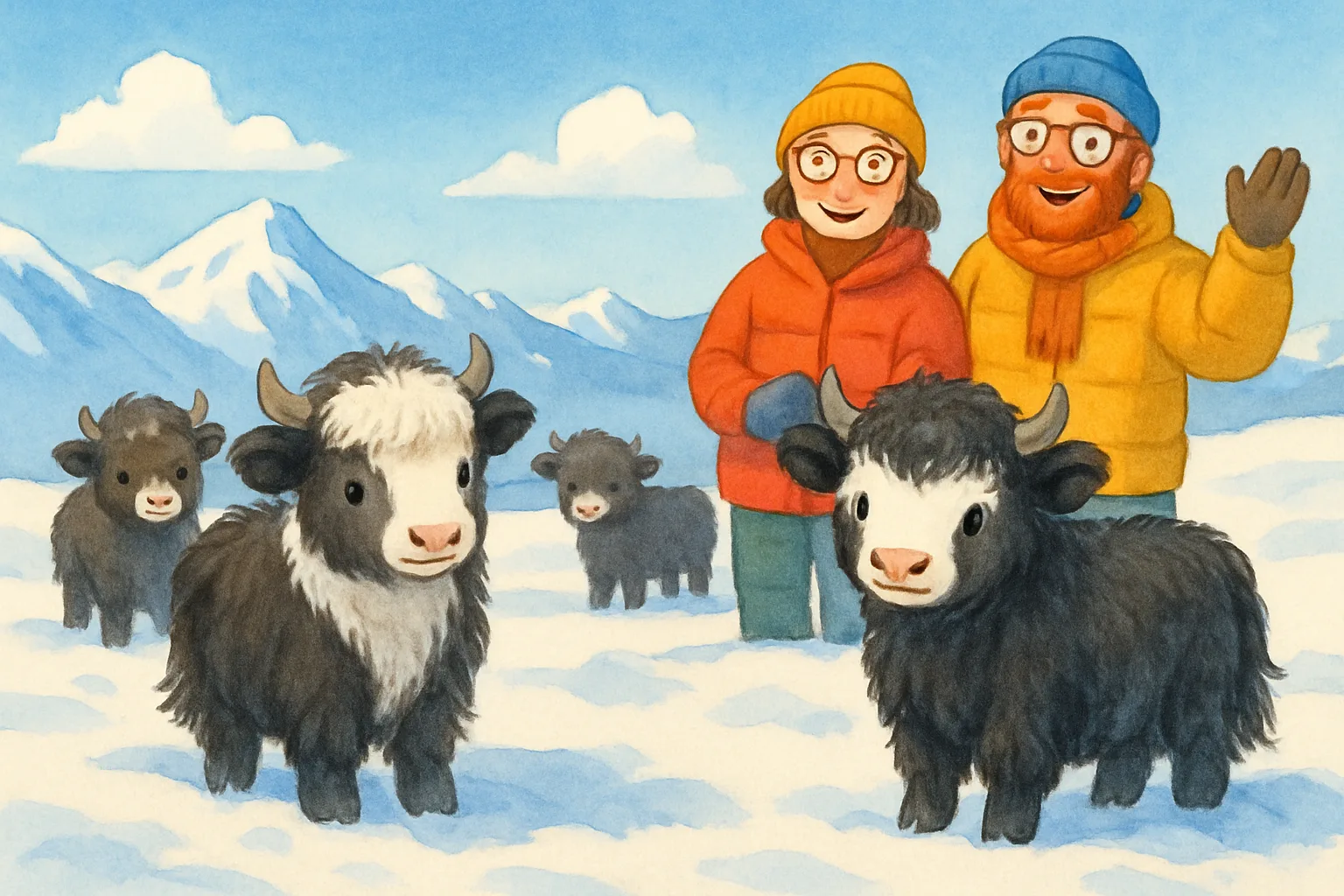
Meet the Clone Crew! Scientists Are Building a Herd of Super-Yaks in Tibet
Quick Summary
Scientists in China have successfully cloned 10 yaks — large, shaggy animals that live high in the mountains of Tibet. It’s a major first step toward building a healthier herd of these special animals. They hope to reach 100 cloned yaks by 2028!
What Happened?
High up in Tibet — more than 13,000 feet above sea level, where the air is thin and the winters are brutal — lives one of nature’s toughest animals: the yak. These big, furry, horned cattle are a little like a cross between a cow and a very large, shaggy dog. They are super important to local communities, who rely on them for food, wool, and transportation.
But yak populations have been struggling. Over the past 30 years, wild yaks have become smaller, less healthy, and harder to breed. Only about 300 golden wild yaks still exist in Tibet. Scientists wanted to help.
The answer they came up with? Cloning. In July 2025, a team from Zhejiang University created the world’s very first cloned yak — a calf named Namtso No. 1. The little yak weighed about 37 pounds at birth, which is about the same as a medium-sized dog. By nine months old, it had grown to a healthy 403 pounds.
Encouraged by that success, the team cloned ten more yaks all at once. Seven were white and three were black. All ten were born naturally between late March and early April 2026 and are growing well. Think of it like going from baking one cookie to baking a whole tray — the scientists figured out how to make the process work reliably, not just once.
The team plans to expand the herd to more than 100 elite cloned yaks by 2028. They’re also working on a technique that can shorten the yak breeding process from 20 years down to under five years.
Why Does It Matter?
Yaks are special in a way that makes cloning them extra tricky. They’ve evolved special cells to survive at high altitude with less oxygen and strong sunlight. That means you can’t just copy a regular cow’s cloning method — you have to solve new puzzles specific to yaks.
If this program works, it could help keep yak populations healthy for generations. Healthy yaks mean healthier mountain communities in Tibet who depend on them. Scientists also hope the knowledge gained from yak cloning could one day help preserve other endangered animals.
Big Words
- Clone — an exact genetic copy of a living thing, created in a lab using the original animal’s cells
- Somatic cell — a regular body cell (like a skin cell) that scientists can use to create a clone — it contains all the instructions needed to build a whole new animal
- Genome — the complete set of genetic instructions inside a living thing, like a massive recipe book that tells the body how to grow and work
- Endemic — found naturally in only one specific place on Earth and nowhere else; yaks are endemic to the Tibetan Plateau
- Breeding cycle — the amount of time it takes to grow and raise an animal from birth until it can have babies of its own
Fun Fact
Yaks can survive temperatures as low as -40°F (-40°C). That’s colder than most places on Earth ever get — cold enough to freeze a can of soda solid in minutes!
Think About It
Cloning helps scientists make copies of animals with the best traits. If you could clone any animal to help protect it, which animal would you choose and why?
Sources
- CNN — What’s horned, fluffy, and ethically dubious? Yak clones (July 25, 2026)
- Xinhua / China Daily — China plans to expand cloned yak population to more than 100 by 2028
- CGTN — China achieves first batch cloning of 10 yaks in Xizang
- Sixth Tone — Nine Months After Cloning Its First Yak, China Has 10 More
- Down To Earth — China Clones 10 Healthy Yaks in High-Altitude Livestock Breeding Breakthrough