
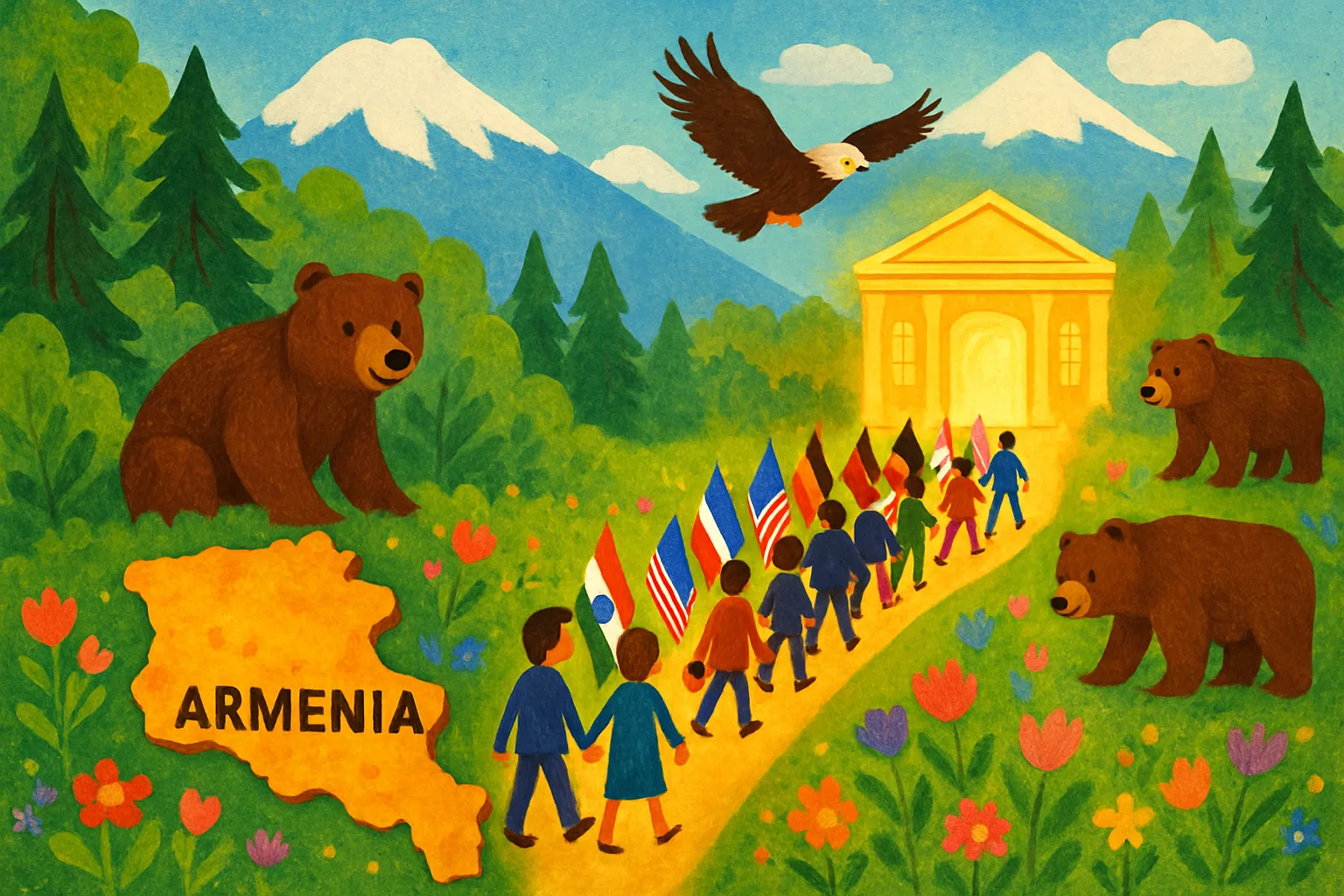
Nature’s Big Meeting! The World Gathers in Armenia to Protect Plants and Animals
Quick Summary
Next week, nearly 200 countries will meet in the city of Yerevan, Armenia, for one of the world’s most important nature conferences. It is called COP17, and its theme is “Taking Action for Nature.” Leaders and scientists will check on how well the world is protecting its plants, animals, and wild places.
What Happened?
Starting October 19, the United Nations Biodiversity Conference — known as COP17 — will open in Yerevan, the capital of Armenia. A total of 196 nations have signed up to attend. That is nearly every country on Earth.
The conference will last two weeks, until October 30. Its main job is to check the world’s progress on a big promise made in 2022. At that earlier meeting, countries agreed on a goal called the Kunming-Montreal Global Biodiversity Framework. One of its biggest targets is protecting at least 30 percent of Earth’s land and oceans by the year 2030. Scientists call this goal “30x30” — meaning 30 percent protected by 2030.
A new UN report shared just ahead of the conference has a warning. Fewer than half of the world’s countries are on track to hit their nature protection goals. The UN is calling on countries to do more — and faster.
Armenia was chosen as the host for a special reason. The country is considered a biodiversity hotspot, meaning it is home to an unusual variety of plants and animals found nowhere else on Earth. One example is the Sevan trout, a fish that lives only in Lake Sevan — the largest freshwater lake in the Caucasus region. Armenia also has ancient forests, mountain meadows, and rare wildflowers.
At COP17, countries will share their plans, compare notes, and agree on new steps to speed up action for nature. Scientists, businesses, community groups, and Indigenous Peoples — who often know the most about protecting local wildlife — will all have a voice.
Why Does It Matter?
Biodiversity means the variety of all living things on Earth — from giant whales to tiny beetles to ancient trees. When we lose species or habitats, the whole web of life can weaken. Healthy nature helps clean our air and water, grow our food, and keep our climate stable. Meetings like COP17 are chances for the world to agree on real plans to keep nature strong for future generations.
Big Words
- Biodiversity — the incredible variety of all living things on Earth, including animals, plants, fungi, and tiny microbes
- COP — short for “Conference of the Parties,” a large international meeting where countries work together on a shared goal
- Ecosystem — a community of living things — plants, animals, and microbes — together with the air, water, and soil they depend on
- Habitat — the natural home or environment where a plant or animal lives
- Indigenous Peoples — communities whose ancestors have lived in a region for thousands of years and who often hold deep knowledge of local nature and traditions
Fun Fact
Armenia is so full of unique wildlife that scientists have found plants and animals there that exist absolutely nowhere else on Earth — species that evolved in its mountains and ancient lakes over millions of years!
Think About It
If you were a leader at COP17, what is one thing you would do to help protect nature in your own neighborhood or country?
Sources
- UN Convention on Biological Diversity (CBD) official site — UN Biodiversity Conference 2026: Taking Action for Nature in Yerevan
- UNDP — CBD COP17 event page
- GIZ — UN Biodiversity Conference 2026: COP17 in a nutshell
- futureoffood.org — COP17: UN Biodiversity Conference event listing
- UN News — The world is waging a ‘war on nature’ as progress on biodiversity targets lags (Oct. 15, 2026)