
The Deep Ocean Has a Secret Cafeteria — and Nobody Knew It Was There!
Quick Summary
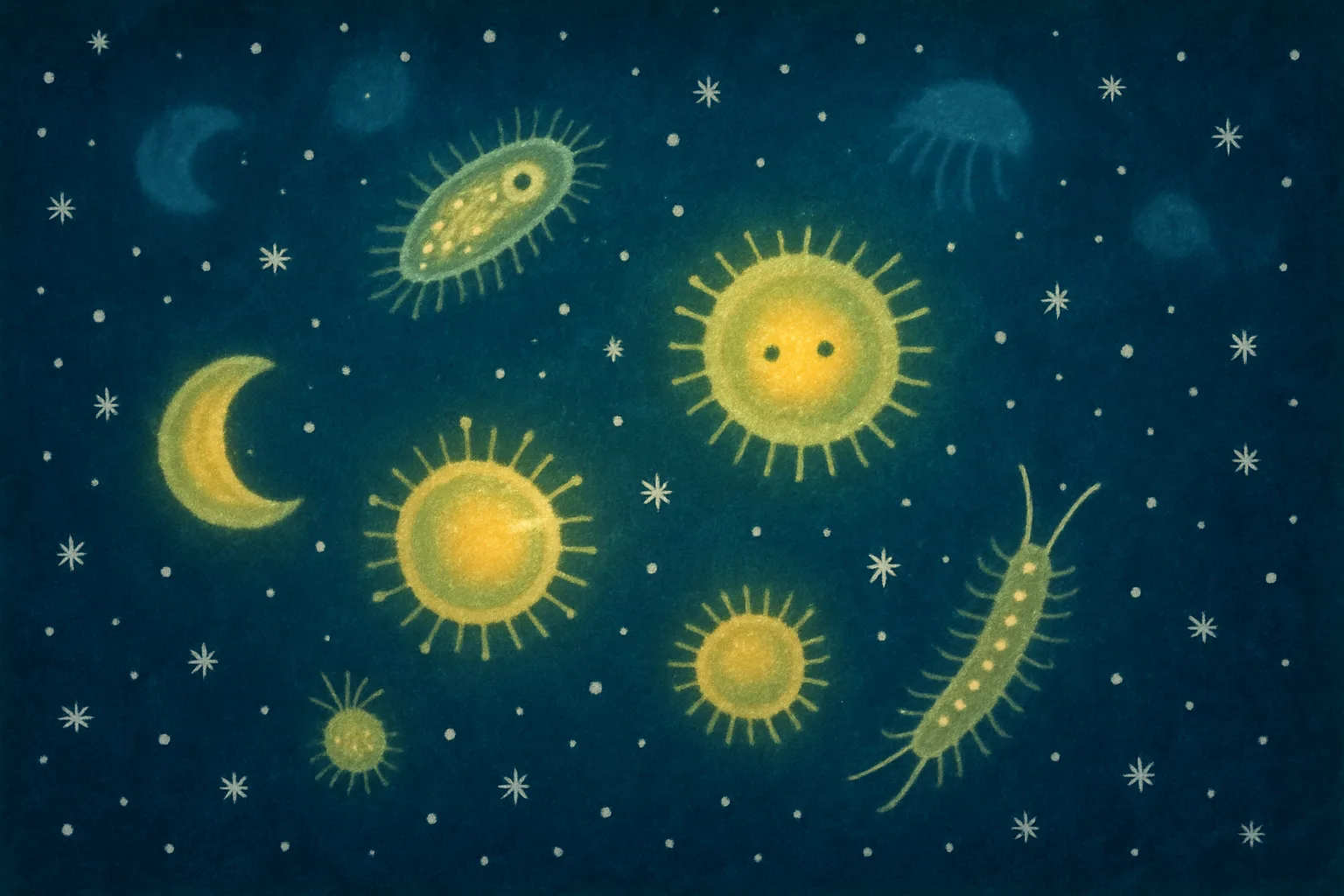
Scientists have discovered something amazing happening in the deepest parts of the ocean. Tiny flakes of dead material drifting downward are being squeezed like a sponge by the crushing water pressure. The nutrients that squirt out become food for billions of microscopic creatures living in the dark.
What Happened?
Far beneath the ocean’s surface — miles and miles down — it is pitch black, ice cold, and the water pressure is enormous. Imagine stacking 100 elephants on top of a tiny bug. That is roughly the kind of pressure we are talking about at the bottom of the ocean.
Scientists have long believed that almost nothing edible reaches that depth. They thought the deep ocean was basically a food desert for tiny living things called microbes.
But a new study from the University of Southern Denmark says they were wrong.
Here is what actually happens. Dead algae, bacteria, and bits of other organic material clump together at the ocean’s surface. They form tiny flakes that look like falling snowflakes as they drift downward. Scientists call this “marine snow.”
As marine snow sinks deeper and deeper, the water pressure around it increases. At depths of about 2 to 6 kilometers — roughly as deep as a mountain is tall — the pressure becomes so intense that it acts like a giant juicer. It actually squeezes dissolved carbon and nitrogen out of the particles.
Those squeezed-out nutrients do not sink away. They float into the surrounding water. And tiny microbes living nearby gobble them up immediately.
In experiments, researchers found that within just two days of this happening, the number of bacteria nearby grew 30 times larger. That is like a classroom of 30 students suddenly becoming a school of 900!
The team found this squeezing effect happening across multiple types of ocean particles. That means it is probably happening all over the world’s deep oceans, not just in one place.
Why Does It Matter?
This discovery rewrites what scientists thought they knew about the deep ocean. Instead of being nearly empty of life, the deep sea may be far busier and more alive than anyone realized.
There is another big reason this matters: carbon. When living things die on the ocean’s surface, their carbon can be stored on the seafloor for millions of years. That carbon storage is one way the ocean helps slow down climate change. Understanding how much carbon leaks out during the sinking journey helps scientists predict how well the ocean can keep doing that important job.
The research team plans to test their findings on a real expedition to the Arctic Ocean aboard a German research vessel.
Big Words
- Microbe — A living thing so tiny you need a microscope to see it; bacteria are one type of microbe.
- Marine snow — Tiny clumps of dead ocean material that drift slowly downward through the water like falling snowflakes.
- Hydrostatic pressure — The squeezing force created by deep water; the deeper you go, the heavier the water above, and the harder it pushes.
- Nutrient — A substance a living thing needs to grow and make energy, like carbon or nitrogen.
- Carbon cycle — The way carbon moves between living things, the atmosphere, oceans, and rocks on Earth.
Fun Fact
The deepest part of the ocean, the Mariana Trench, goes down about 11 kilometers — that is deeper than Mount Everest is tall! The water pressure there is more than 1,000 times the pressure you feel at the beach.
Think About It
If scientists are still discovering secret food sources in the deep ocean, what other surprises do you think might be hiding miles below the waves?
Sources
- ScienceDaily — Deep-sea life has a secret food source scientists never expected (July 12, 2026)
- SciTechDaily — Extreme Ocean Pressure Is Feeding Deep-Sea Life in a Way Scientists Never Expected
- University of Essex — Deep-sea Microbes Get Unexpected Energy Boost
- University of Southern Denmark (SDU) — Deep-sea pressure preserves food for microbes in the abyss