
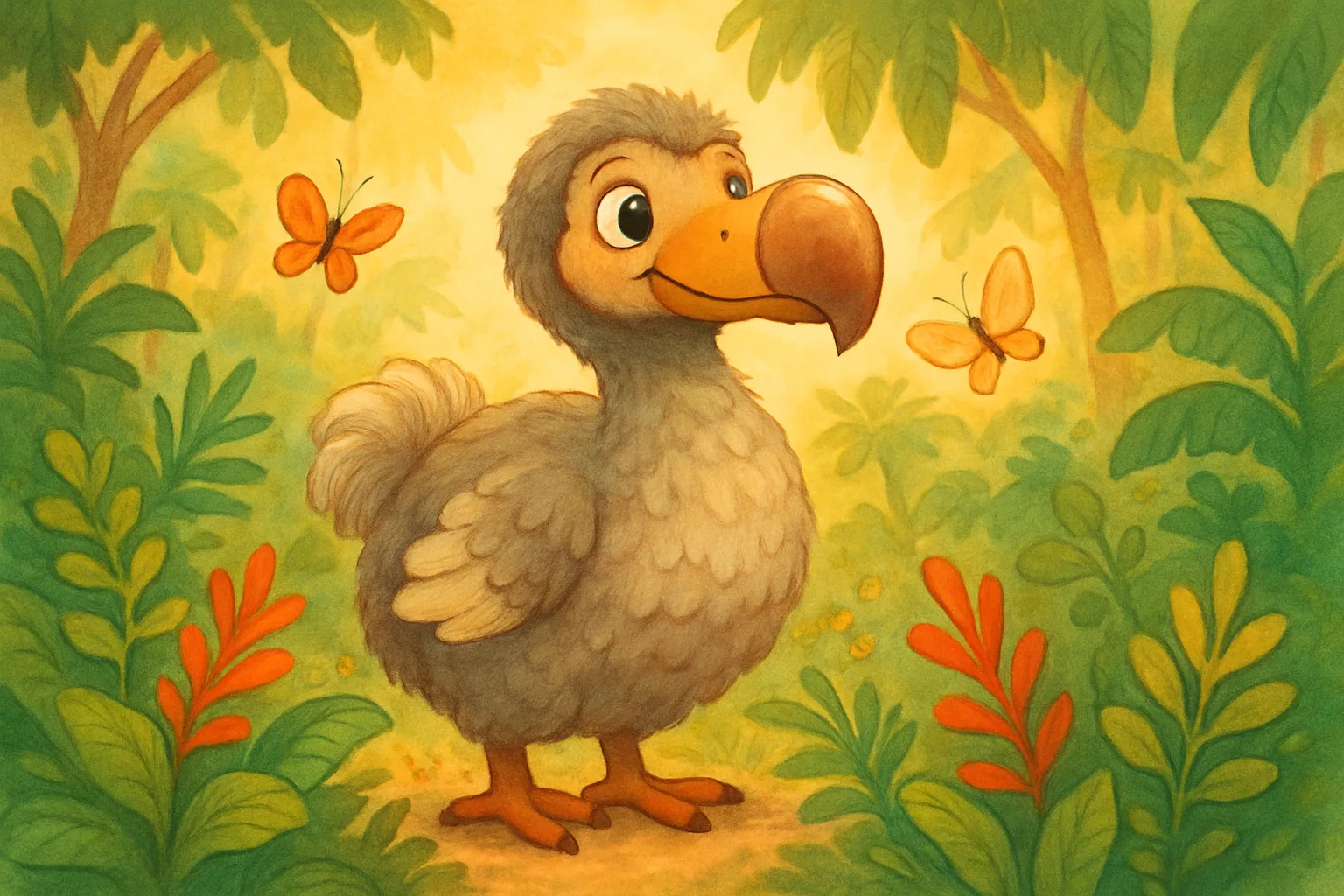
Not So Dumb After All! Scientists Discover the Dodo’s Secret Superpowers
Quick Summary
For hundreds of years, people called the dodo a silly, brainless bird. A brand-new study using special brain scans has just proved that wrong. The dodo was actually a much more clever and capable animal than anyone imagined.
What Happened?
Scientists at the University of Lethbridge in Canada — working with researchers from Denmark, Australia, Scotland, and the United States — used high-powered CT scanners on some very rare dodo skulls.
A CT scanner is like a super-advanced X-ray machine. It takes hundreds of pictures from every angle and builds a full 3D image of the inside of an object. For the dodo, it let scientists peek inside the skull and see exactly how the brain was shaped — without touching or damaging the bone.
Only two complete dodo skulls exist anywhere in the world. One is in Denmark and one is in Oxford, England. Both are hundreds of years old. Together with a few other partial skulls from museums, the team got a detailed picture of the dodo’s brain for the first time ever.
Here is what they found.
First, the dodo’s brain was actually a normal size for a bird of its body weight. So there is no evidence at all that dodos were less intelligent than other birds.
Second, the area of the brain linked to smell was unusually large. Scientists now suspect that dodos had a very strong sense of smell — much better than most pigeons. Their closest living relative is the Nicobar pigeon, and the dodo’s smell center was far bigger than its cousin’s. Having a powerful nose would have helped the dodo sniff out ripe fruit and other food hiding under leaves on the forest floor.
Third, the dodo’s optic lobes — the brain parts that process sight — were smaller than those of its relatives. Small optic lobes are a clue often seen in night-adapted birds like owls and kiwis. This suggests dodos may have been active at dawn and dusk, not just during bright daylight.
Finally, the dodo’s big upper beak appears to have been packed with nerves — more than scientists expected. A nerve-rich beak works like a set of fingertips. It could feel and gently probe the ground to detect food, textures, and vibrations.
Why did people think dodos were dumb? The birds lived on the island of Mauritius and had no natural predators for millions of years. When humans arrived in the 1600s, the dodos walked up to them without fear. That trusting behavior looked foolish. Sadly, it led to the species going extinct within just a few decades.
Why Does It Matter?
This study is a reminder that we should not judge animals — or anything else — by appearances or old stories. The dodo became one of the most famous symbols of extinction in the world. Now we know it was a finely adapted, sensory-rich creature that deserved its home on Mauritius. Understanding how the dodo really lived helps scientists understand what was lost when it disappeared.
The research was published in the scientific journal Zoological Journal of the Linnean Society.
Big Words
- CT scan — a type of powerful X-ray that creates detailed 3D images of the inside of an object
- Optic lobe — the part of the brain that processes what the eyes see
- Endocast — a 3D model made from the inside of a skull, showing the shape of the brain
- Nocturnal — active mainly at night, like owls and bats
- Extinct — when a whole species of living thing has completely died out and is gone forever
Fun Fact
The dodo was a giant pigeon! It could weigh up to 40 pounds — about as heavy as a medium-sized dog. Its closest living relative today is the Nicobar pigeon, a small, colorful island bird that weighs less than a pound.
Think About It
If the dodo had a great sense of smell and may have seen well in low light, what kind of food do you think it was searching for? What other extinct animals might have hidden talents we haven’t discovered yet?
Sources
- ScienceDaily / University of Copenhagen — The dodo bird had a secret sensory world scientists are only now discovering (Aug. 8, 2026)
- Phys.org / University of Lethbridge — Dodo birds more clever than we thought (Aug. 8, 2026)
- Sci.News — Dodo Had Surprisingly Keen Sense of Smell and Owl-Like Vision, New Study Reveals (Aug. 6, 2026)
- The New Daily — Turns out, dodos probably weren’t so daft after all (Aug. 9, 2026)
- The Business Standard — Scientists uncover dodo bird’s hidden sensory abilities (Aug. 9, 2026)