
Dragon Lights! The Draconid Meteor Shower Peaks Tomorrow Night — and You Can Watch Right After Dinner
Quick Summary
Tomorrow night, the Draconid meteor shower will be at its best. Streaks of light will flash across the sky after darkness falls. This year is special because there is almost no moonlight — making the meteors easier to see than ever.
What Happened?
Get ready for a sky show! Every year in early October, Earth passes through a cloud of dusty debris left behind by a comet. When those tiny bits of comet dust slam into Earth’s atmosphere, they burn up in a bright flash. We see those flashes as shooting stars, or meteors.
This year’s Draconid meteor shower peaks on the night of October 8 going into October 9. Conditions are fantastic. The Moon will be just a tiny crescent sliver, barely visible — so the sky will be very dark. Dark skies make even faint meteors easy to spot. Last year, a bright full Moon washed out most of the Draconids. This year is a big improvement.
The Draconids get their name from Draco, the Dragon constellation. That is where the meteors appear to come from in the sky — a point called the radiant. The parent comet is called 21P/Giacobini-Zinner. It left behind a trail of rocky crumbs as it orbited the Sun. Each October, Earth plows through that trail.
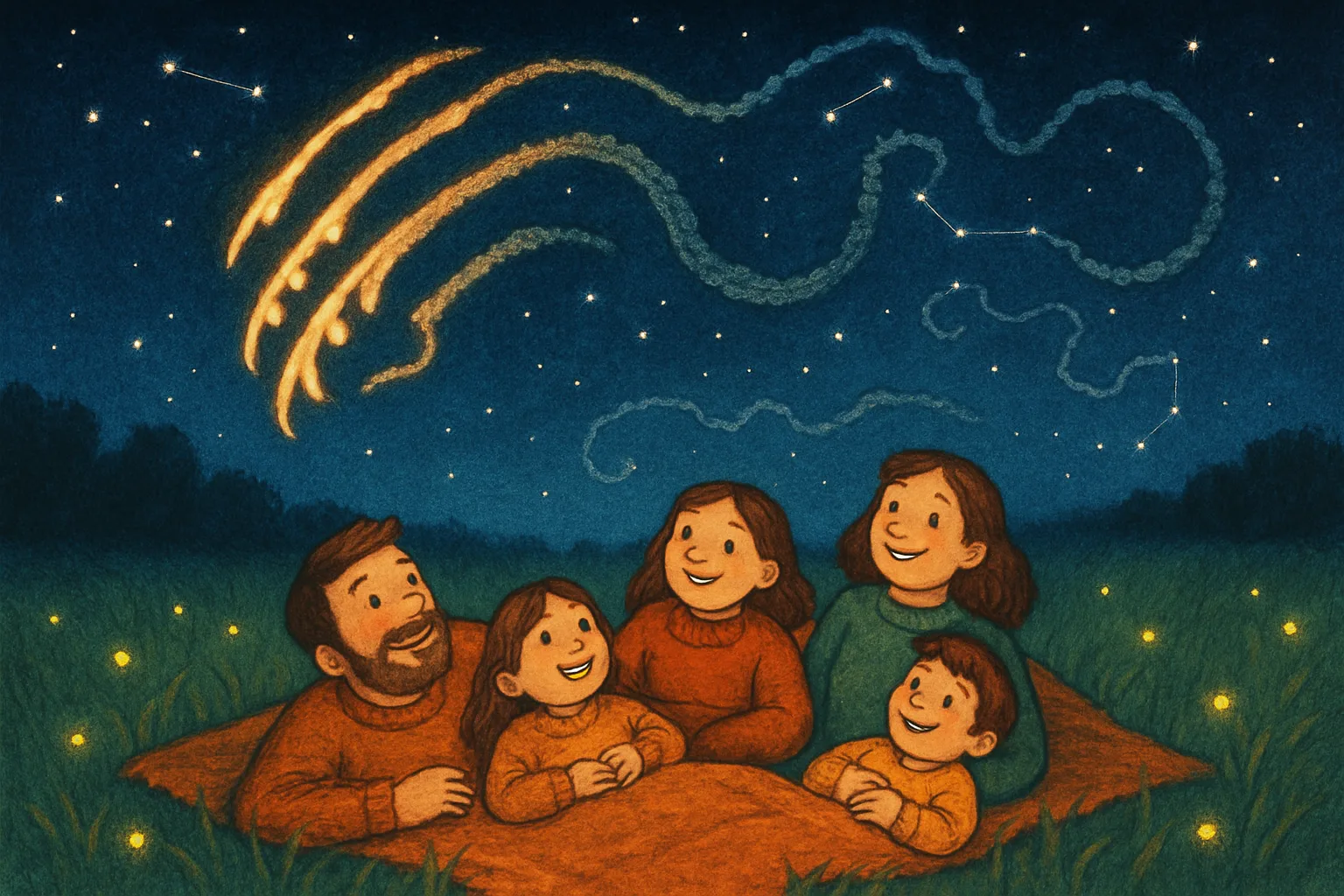
One of the coolest things about the Draconids is the timing. Most meteor showers are best seen at 2 or 3 in the morning, which is hard for kids. But the Draconids are different. Because the radiant point sits high in the northern sky in the early evening, the best time to watch is right after it gets dark — around 8 p.m. or so. No staying up until midnight required!
Look north toward the constellation Draco, near the bright star Vega. You do not need a telescope. Just find a dark spot away from bright lights, lie on your back, and look up. Give your eyes about 15 minutes to adjust to the dark, then watch. You might see about 5 to 10 meteors per hour. Occasionally, the Draconids can surprise everyone with a much bigger burst.
Why Does It Matter?
Meteor showers are one of the easiest ways to connect with space without any special equipment. They remind us that Earth is constantly moving through the solar system, sweeping up the leftovers from billions of years of comet journeys. Every shooting star you see is a tiny piece of our solar system’s history, burning up right in front of you.
Big Words
- Meteor — a piece of space rock or dust that burns up in Earth’s atmosphere and creates a bright streak of light in the sky
- Radiant — the point in the sky from which a meteor shower seems to come, like the center of a fireworks burst
- Constellation — a group of stars that form a pattern or picture in the sky, like Draco the Dragon
- Comet — a large, icy space object that leaves behind a dusty trail as it travels around the Sun
- Debris — leftover bits and pieces, like the dusty trail a comet leaves behind on its journey through space
Fun Fact
The Draconids travel at about 20 kilometers per second — but that actually makes them slow compared to other meteor showers! Their unhurried speed means their trails often linger in the sky for a second or two, making them extra beautiful to watch.
Think About It
If you named a meteor shower after your favorite animal, what constellation would it come from, and what would you call it?
Sources
- StarWalk Space — Draconid Meteor Shower 2026: Peak Date, Time, and Where to Watch
- Farmer’s Almanac — Draconid Meteor Shower 2026: Watch Right After Dark
- TimeAndDate.com — Draconids Meteor Shower 2026
- NewsBytesApp — Draconids meteor shower peaks October 8 with early evening viewing