
Rain, Where Are You? A Giant Drought Is Hitting Central America Hard
Quick Summary
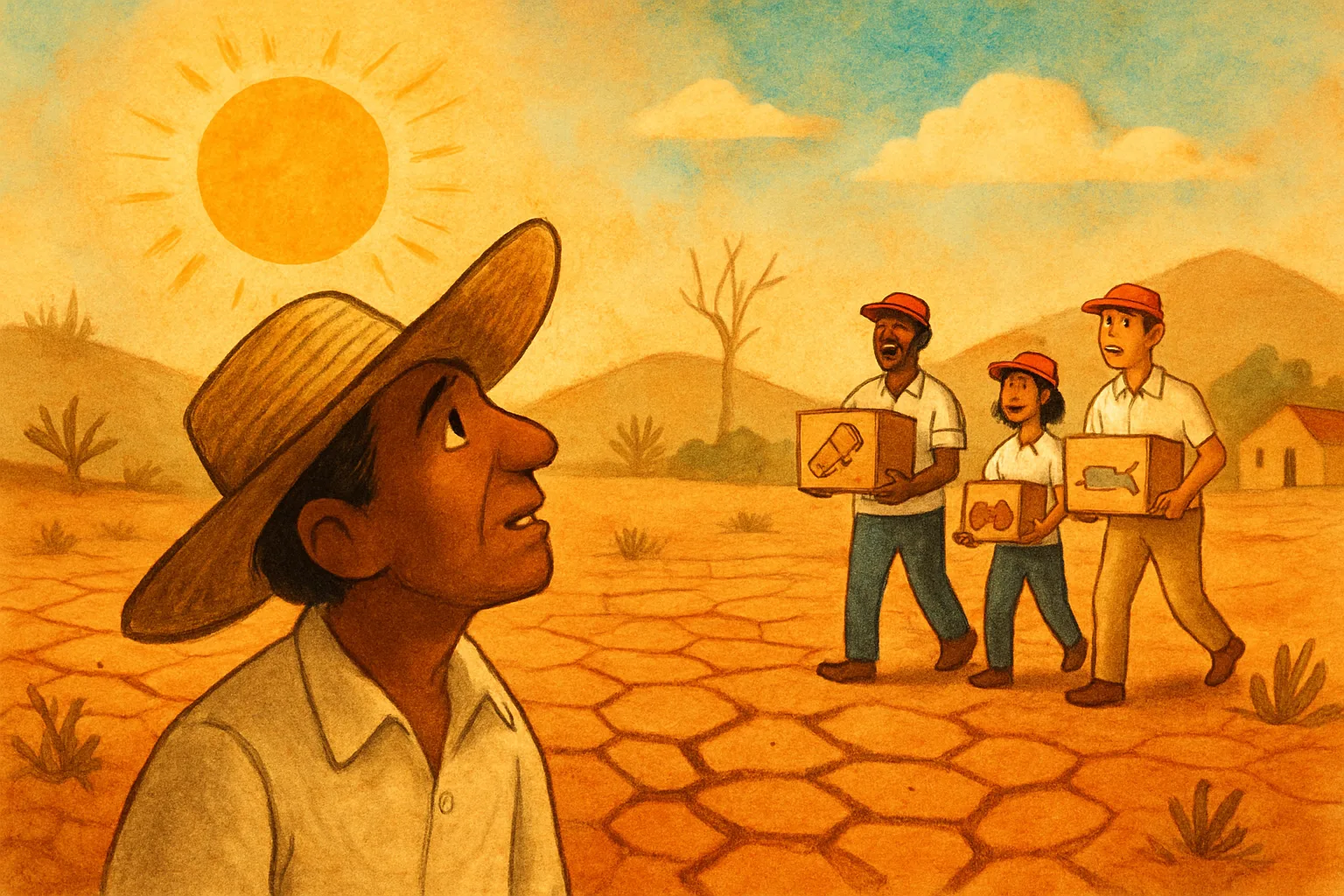
A powerful weather pattern called El Niño has caused a very serious drought across Central America. Crops are failing and families are struggling to find enough food. Today, Guatemala announced it will send food help to more than one million families.
What Happened?
Imagine going weeks without a single drop of rain. For millions of people in Central America, that is not imaginary — it is real life right now.
A region called the Dry Corridor is suffering through one of the worst droughts in living memory. This area stretches across parts of Honduras, Guatemala, El Salvador, Nicaragua, and Costa Rica. More than 10 million people call it home.
The cause is a weather pattern called El Niño. El Niño happens when the surface of the Pacific Ocean in the tropics warms up. That extra warmth throws off wind and rainfall patterns all around the world. Think of it like a big warm bubble in the ocean that messes up the weather like a stone dropped in a still pond.
This year’s El Niño is being called the strongest since scientists started keeping records — about 40 years ago. In some areas, there have been up to 19 days in a row with no rainfall at all. Temperatures have shattered records, reaching as high as 44 degrees Celsius (about 111 degrees Fahrenheit) in parts of El Salvador.
Farmers depend on rain to grow corn and beans — the foods that feed their families. Without rain, those crops are failing. Governments in Honduras, El Salvador, and Panama have already declared national emergencies.
Today, Guatemala’s government announced it will provide food assistance to more than one million families who are struggling because of the drought.
Why Does It Matter?
The United Nations World Food Programme has warned that as many as 16 million people across Latin America could face food shortages because of this El Niño. That is roughly the same as the entire population of the Netherlands — struggling to find enough to eat.
There is good news in the response, though. Aid organizations, governments, and communities are working together to get food to the people who need it most. Some farmers are even switching to plants that need less water, like chili peppers, to try to survive the drought.
Scientists say the link between a warming planet and stronger El Niño events is something the world needs to pay close attention to.
Big Words
- El Niño — a natural weather pattern that starts when the Pacific Ocean warms up more than usual, causing unusual rain and drought around the world.
- Drought — a long period of time with very little or no rain, which dries up land and kills crops.
- Dry Corridor — a strip of land in Central America that naturally gets less rain than other areas and is now suffering extreme drought.
- National emergency — an official announcement by a government that a situation is so serious that special help and resources are needed right away.
- Food aid — food given by governments or charities to people who do not have enough to eat.
Fun Fact
El Niño gets its name from Spanish words meaning “The Little Boy” or “The Christ Child,” because it often arrives around Christmastime. Even though the name sounds small and gentle, El Niño can cause massive changes in weather all around the planet!
Think About It
If a warming ocean can change weather patterns for millions of people thousands of miles away, what else might the ocean be quietly affecting that scientists are still trying to understand?
Sources
- AFP / The Manila Times — ‘Guatemala to provide food aid as El Nino causes severe drought’ (Sep 17, 2026)
- The Tico Times — ‘Central America Drought Kills Cattle and Threatens Food Supply’ (Sep 16, 2026)
- Global-Agriculture.com — ‘El Niño Drought Triggers Emergency Declarations Across Central America’ (Sep 14, 2026)
- Malay Mail / AFP — ‘Dead animals, barren fields and hunger as strongest-in-decades El Nino chokes Central America’ (Sep 17, 2026)