
🔎 This story is still developing. We will update it as we learn more!
Helpers to the Rescue! Europe’s Firefighters Battle Giant Wildfires in France and Spain
Quick Summary
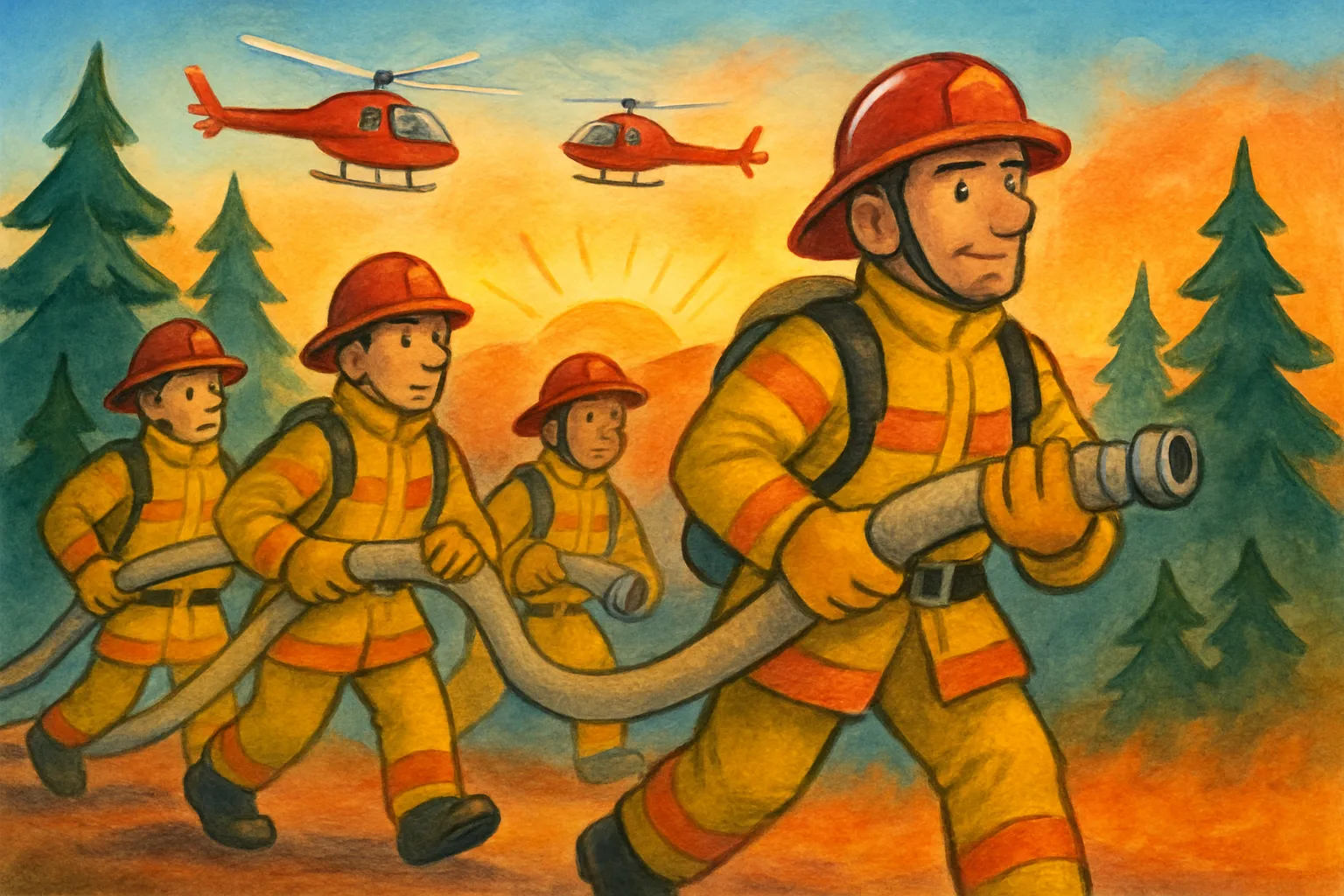
Huge wildfires have been burning through parts of France and Spain for about a week. More than 300,000 people had to leave their homes to stay safe. Thousands of brave firefighters from across Europe arrived to help battle the flames.
What Happened?
Since late July, powerful wildfires have been burning through forests in southwestern France and parts of Spain. Hot, dry weather and strong winds helped the fires spread quickly.
In France, fires broke out near the city of Bordeaux — a place famous for its vineyards and forests. The evacuation there became the largest in France since World War II. That means more people had to leave their homes at once than at any time in over 80 years.
In Spain, fires burned near the capital city of Madrid and in a coastal region called Castellón. Spanish firefighters worked to prevent the flames from spreading to more neighborhoods. Families sheltered in sports centers, exhibition halls, and community buildings while waiting for news about their homes.
Fighting wildfires is an enormous team effort. European countries sent aircraft and firefighters to help. Greece sent two special water-dropping planes called CL-415s. These aircraft scoop up water from lakes or the ocean and drop it on fires — almost like a giant flying bucket brigade. European Union emergency systems helped coordinate everything so that resources arrived exactly where they were needed.
Scientists studying climate noted that France had already experienced 3.4 times as many fires as its usual annual average this year. Spain had seen 1.7 times as many. A warmer, drier climate means fires can start more easily and grow bigger.
Why Does It Matter?
Wildfires are becoming more common and more powerful in many parts of the world as temperatures rise. Scientists have been warning about this for decades. But this story also shows something hopeful: when communities face danger, people — and countries — work together.
Firefighters trained for exactly these moments. Emergency shelters opened within hours. Neighboring nations shared resources. Scientists studied the fires in real time to help predict where they might spread next. All of that teamwork saves lives.
Big Words
- Wildfire — an uncontrolled fire that spreads rapidly through forests, grasslands, or other natural areas
- Evacuation — the organized movement of people away from a dangerous area to a safer place
- CL-415 — a special type of airplane built to fight wildfires by scooping up water and dropping it on flames from above
- Climate change — long-term shifts in Earth’s temperatures and weather patterns, largely caused by human activities that release greenhouse gases
- European Union Civil Protection Mechanism — a system that lets European countries share emergency resources like firefighting planes and personnel when a disaster is too big for one country to handle alone
Fun Fact
A single CL-415 water-bomber can scoop up about 1,620 gallons of water from a lake in just 12 seconds — that’s about the same as filling 25 bathtubs almost all at once!
Think About It
Fighting wildfires takes people from many different countries working together. Can you think of another big challenge that might be easier to solve if lots of countries teamed up?
Sources
- CNN — July 26-27, 2026 — France and Spain wildfires: more than 300,000 displaced
- NPR World News — Hundreds of thousands of people have been forced from their homes as wildfires sweep across Spain and France