
Horn of Hope! The Indian Rhino Is Making an Amazing Comeback
Quick Summary
The greater one-horned rhinoceros — also called the Indian rhino — is bouncing back in a big way! The global population has now reached about 4,075 animals, up from fewer than 100 a little over a century ago. India just launched a new program to keep this success story going.
What Happened?
The greater one-horned rhino is the largest rhino species in Asia. These incredible animals can weigh as much as a small car — between 4,000 and 6,000 pounds — and stand about 7 feet tall at the shoulder.
In the early 1900s, hunting and habitat loss had pushed the species to the edge of extinction. Fewer than 100 were thought to survive in the wild. That is like having fewer rhinos left than students in your school.
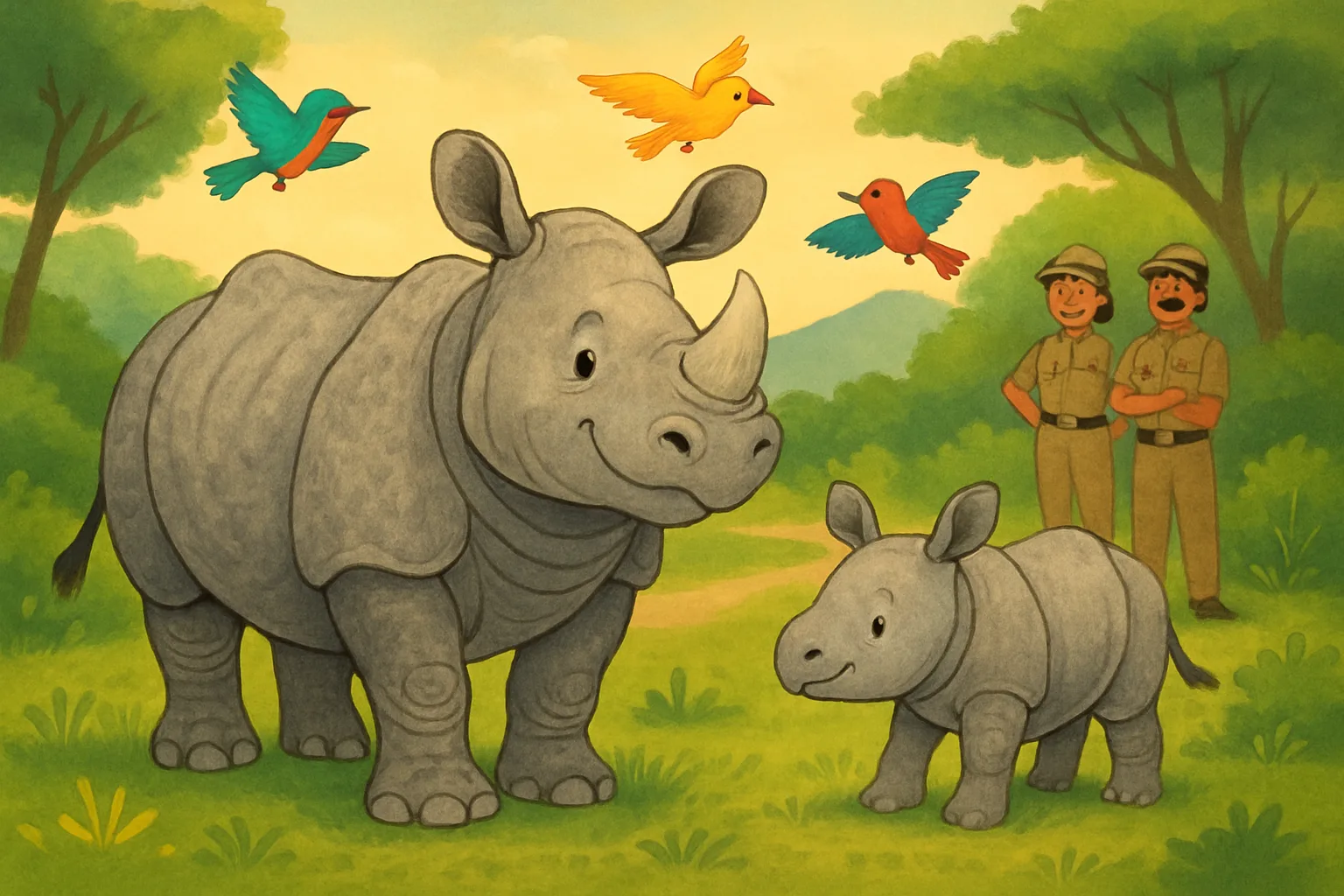
But people fought back. India and Nepal created protected national parks. Rangers worked hard to stop poaching — the illegal hunting of animals. In 2025, the Indian state of Assam reported zero rhino-poaching cases. That is remarkable. Back in 2014, 27 rhinos were poached in the same region.
The results have been extraordinary. The IUCN Asian Rhino Specialist Group now estimates about 4,075 greater one-horned rhinos survive in the wild. About 80% of them live in India’s state of Assam, and more than 60% call Kaziranga National Park their home.
To celebrate this progress, India this week launched a new national program called Project Rhino. It gives extra funding and support to states that shelter rhinos, with a focus on protecting their habitat and studying their populations.
Scientists have also started moving rhinos to new protected areas. This spreads the population out, so that one flood or disease cannot wipe out the whole species in one place.
Why Does It Matter?
The Indian rhino’s comeback is one of the greatest wildlife success stories in history. It shows that when governments, rangers, and communities work together, animals can recover from the very edge of extinction.
But the rhino is still listed as “Vulnerable” on the scientific danger list. There is still work to do. Poachers still want rhino horns, which some people mistakenly believe have special powers. Protecting rhinos requires constant effort.
Big Words
- Greater one-horned rhinoceros — The largest rhino in Asia, named for its single large horn; also called the Indian rhino
- Poaching — Illegally hunting or capturing wild animals
- Habitat — The natural environment where an animal lives and finds everything it needs to survive
- Translocation — Moving an animal from one place to another to help its population spread and grow
- Vulnerable — A scientific label for a species that is at risk of becoming endangered if things don’t improve
Fun Fact
Kaziranga National Park in Assam is sometimes called the “Rhino Capital of the World.” It is also a UNESCO World Heritage Site — a place officially recognized as important to all of humanity!
Think About It
The Indian rhino’s population grew from under 100 to over 4,000 in about a century. What do you think were the most important steps that made this comeback possible? What might happen if people stopped protecting them?
Sources
- India Wildlife News — India Launches Project Rhino as Population Tops 4,000
- Save the Rhino International — Rhino population figures (in-situ: 4,075)
- Travel PR News — Greater One-Horned Rhino Numbers Reach 4,075 as World Rhino Day Highlights Conservation Gains
- Kihikila.in — Rhino Population: Assam Records 3,260