
🔎 This story is still developing. We will update it as we learn more!
A Mystery in Elephant Country: What Happened to the Amboseli Herd?
Quick Summary
Wildlife investigators in Kenya are working hard to solve a sad and puzzling case. Fifteen elephants died near one of Africa’s most famous wildlife parks over the past month. Scientists believe the elephants were accidentally poisoned by farm chemicals — and they are now working to make sure it never happens again.
What Happened?
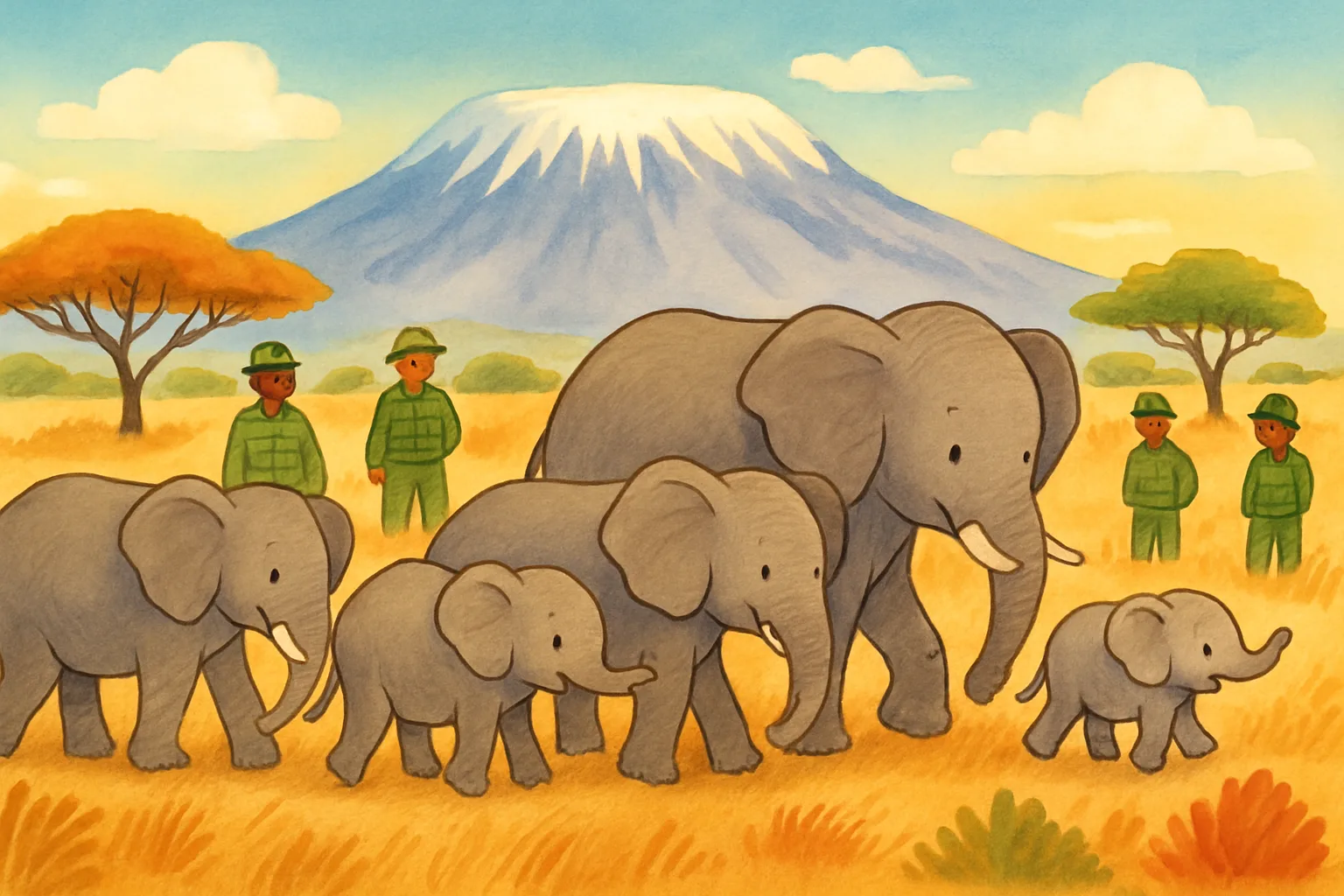
Amboseli National Park sits in southern Kenya, not far from the foot of Mount Kilimanjaro — the tallest mountain in Africa. The park is world-famous for its gentle giant elephants. More than 2,000 elephants roam the Amboseli area.
Over the course of a month — between late June and late July 2026 — fifteen of those elephants died. Rangers noticed some elephants falling ill and were alarmed. Lab tests later found traces of a toxic chemical called cyanide in samples from the animals’ bodies.
Scientists from Kenya’s wildlife agency, called the Kenya Wildlife Service (KWS), say the elephants likely ate tomatoes from nearby farms. Those tomatoes had been sprayed with pesticides containing cyanide — a very dangerous chemical sometimes used to keep pests away from crops.
Elephants are curious and hungry animals. They often wander out of the park and onto nearby farmland looking for food and water. The farm fields sit right next to their migration routes — the paths they follow through the seasons.
One herd at the Kimana Wildlife Sanctuary was hit especially hard. Six elephants from a single group died within a short period, including mothers and calves.
Investigators say they have now contained the situation. They are also checking whether other farmers in the area use the same chemicals.
Why Does It Matter?
Conservation groups across Kenya and around the world are calling for a closer look at which farm chemicals are allowed near wildlife areas. They want stronger rules to protect both elephants and the people who live nearby.
The KWS has reassured the public that the chemicals in the elephants’ bodies do not pose a risk to humans.
Kenya’s government says it is working with farmers and conservationists together to find safer ways to protect crops — ways that do not harm the animals that make Amboseli so special.
Wildlife tourism is very important to Kenya’s economy. Millions of visitors come each year just to see Amboseli’s elephants. Protecting these animals protects the livelihoods of many Kenyan families too.
The investigation is still ongoing.
Big Words
- Cyanide — a very powerful toxic chemical that can be deadly to animals and people in even small amounts
- Pesticide — a chemical sprayed on crops to kill insects or pests that damage plants
- Migration corridor — the path that animals travel regularly through different areas in search of food, water, or shelter
- Conservation — the work of protecting animals, plants, and natural environments so they can survive for the future
- Kenya Wildlife Service (KWS) — the government agency in Kenya that protects the country’s wildlife and national parks
Fun Fact
An adult elephant can eat up to 300 pounds of food in a single day — that is about the weight of a full-grown lion! It is no wonder they wander beyond park boundaries looking for extra snacks.
Think About It
If you were a wildlife scientist working on this case, what would you do to help farmers and elephants safely share the same land?
Sources
- BBC Africa / Yahoo News — ‘Cyanide in tomato pesticide killed 15 elephants, Kenyan officials suspect’
- Citizen Digital — ‘Cyanide poisoning killed 15 elephants in Amboseli, KWS confirms’
- AllAfrica — ‘Pesticide Poisoning Suspected in Deaths of 15 Kenya Elephants’
- Africanews — ‘Kenya: Fifteen elephants found dead of suspected pesticide poisoning’