
Red Planet in a Star Swarm! Mars Is Inside the Beehive Cluster Right Now
Quick Summary
Something rare and beautiful is happening in the sky right now. The planet Mars is passing directly through a huge swarm of stars called the Beehive Cluster. You can see it this morning before the sun rises — and all you need is a pair of binoculars or even just your eyes.
What Happened?
Look up before sunrise today, and you will spot a bright orange-red dot hanging in the eastern sky. That is Mars. But something special is happening around it today.
Mars is slowly drifting through a group of stars called the Beehive Cluster. Its official name is Messier 44, or M44 for short. It sits in the constellation Cancer the Crab.
The Beehive Cluster contains about 1,000 stars. Most of them are young and bright. From Earth, they look like a faint, fuzzy glow — imagine a tiny smear of light about three times wider than the full Moon in the sky.
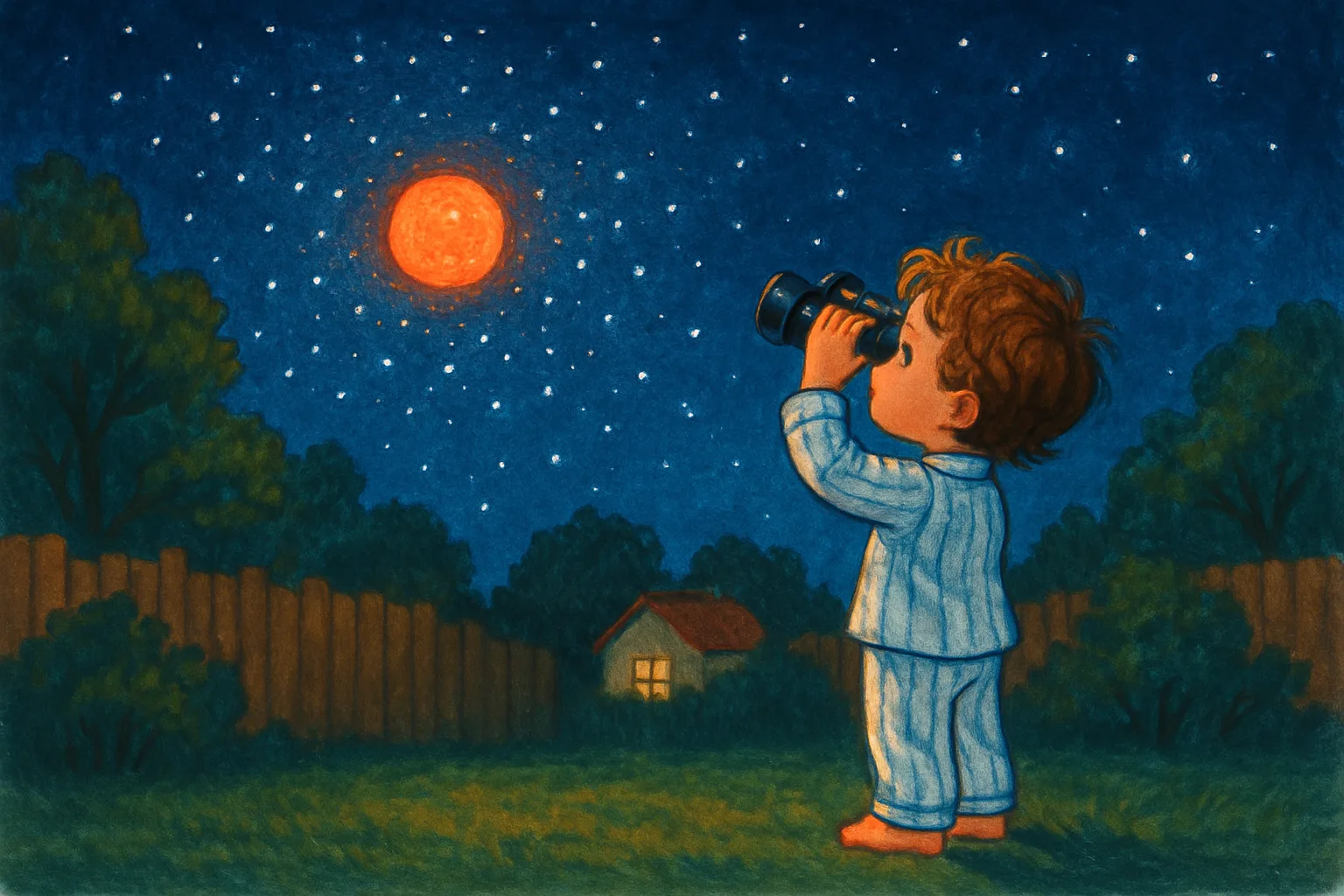
With binoculars, the view becomes magical. You can see dozens of pinprick blue and white stars all around the glowing orange-red disk of Mars. Astronomers say October 11 is the peak of this event. Today, Mars appears almost perfectly centered in the middle of the cluster.
Mars rises around 1 a.m. local time. By 4 a.m., it is already high enough in the eastern sky to get a great view. The best time to look is about an hour before sunrise, when Mars is high but the sky is still dark.
Mars is not actually inside the star cluster, of course. The planet is only about 113 million kilometers away right now — close enough to appear as a bright dot. The Beehive stars are about 577 light-years away. That is roughly 5,000 trillion kilometers. They just happen to line up beautifully from our point of view on Earth.
Why Does It Matter?
This kind of planetary alignment with a star cluster is a rare treat. Mars moves slowly enough that it takes several days to cross through the Beehive, but today is the best day to catch it right in the heart of the swarm.
Astronomers note that Mars is getting slowly brighter this autumn. It is heading toward an opposition — its closest approach to Earth — in February 2027. That means over the next few months, Mars will grow larger and brighter in the sky. Tonight is a wonderful preview!
Skywatchers in North America, Europe, and beyond can all enjoy this event. No telescope is needed, though even a small one will make the view even more spectacular.
Big Words
- Star cluster — a group of stars that were all born from the same giant cloud of gas and dust, and are held loosely together by gravity.
- Constellation — a pattern of stars in the sky that has been given a name, like Cancer the Crab or Orion the Hunter.
- Opposition — the moment when a planet is directly opposite the Sun as seen from Earth, making it appear biggest and brightest in our sky.
- Magnitude — a number used by astronomers to describe how bright something looks in the sky; lower numbers mean brighter objects.
- Light-year — the distance light travels in one year — about 9.5 trillion kilometers — used to measure enormous distances in space.
Fun Fact
The Beehive Cluster got its buzzy name because through early telescopes, the fuzzy smear of starlight looked a little like a swarm of bees hovering in the sky. Some ancient astronomers also used the Beehive to predict the weather — if it disappeared on a clear night, they thought a storm was coming!
Think About It
Mars is not really inside the Beehive Cluster — it just looks that way from Earth. Can you think of another example in everyday life where two things look close together but are actually very far apart?
Sources
- Astronomy.com — The Sky Today on Sunday, October 11: Mars meets the Beehive
- Space.com — October 2026 Planet Guide: Mars meets the Beehive
- EarthSky — Visible planets and night sky guide for October: Around October 11, Mars buzzes the Beehive
- Starlust.org — Mars is set to cross a spectacular swarm of stars soon
- StarWalk Space — October Astronomical Events: What to See in the Night Sky