
Your Own AI Helper? Meta Says Everyone Could Have One Soon
Quick Summary
The company behind Facebook, Instagram, and WhatsApp just made a big announcement. Meta’s boss, Mark Zuckerberg, says he wants to build a personal AI assistant for every single person on Earth. Think of it like a super-smart helper that is always available — day or night.
What Happened?
Meta is the company that owns some of the world’s most popular apps. Every day, about 3.6 billion people — nearly half the world’s population — use at least one of Meta’s apps. That is roughly the same as if every person in North America, South America, Europe, Africa, and Australia all used the same apps.
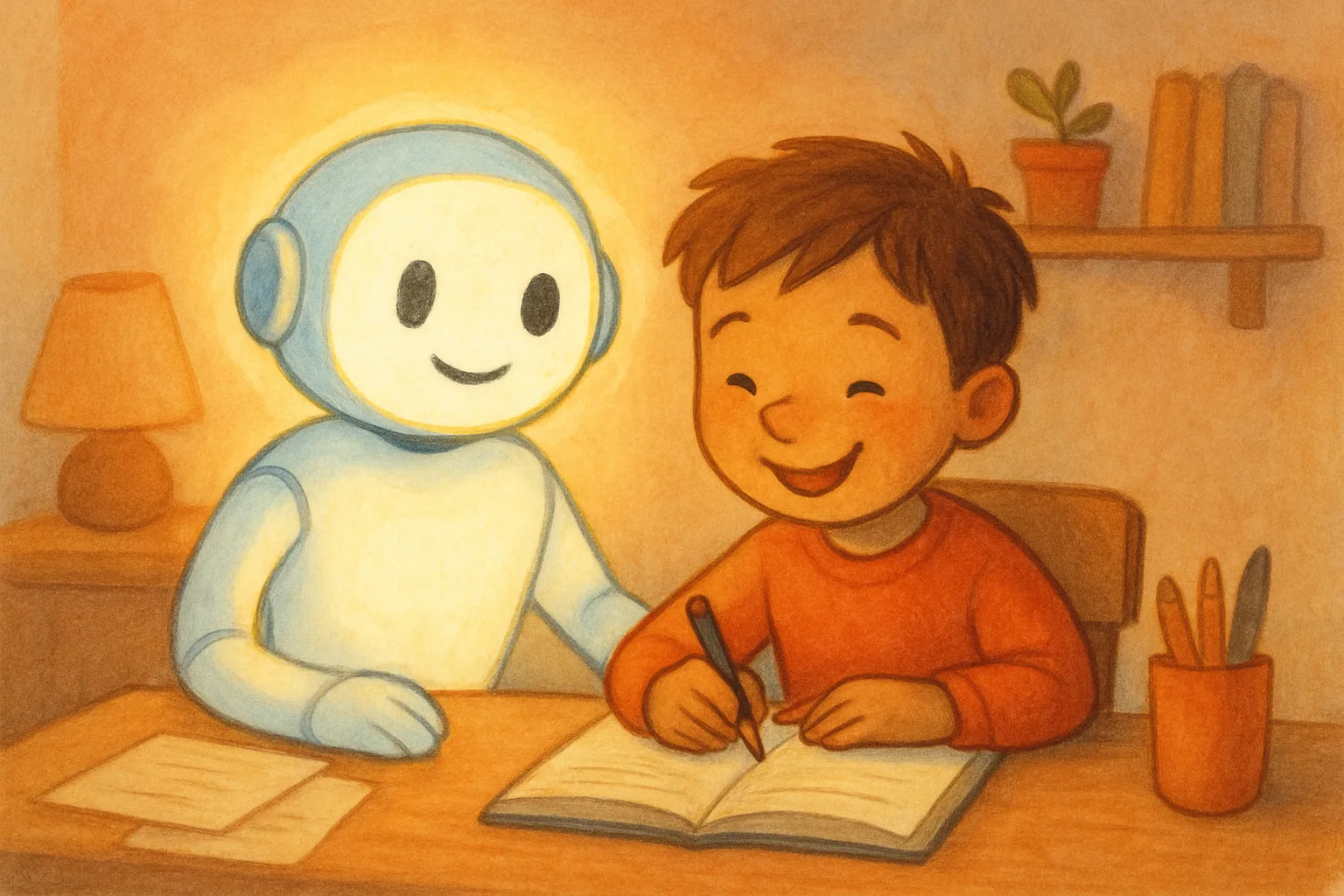
This week, Meta’s chief executive, Mark Zuckerberg, described a new kind of product the company is building: a personal AI agent. An agent is different from a simple chatbot. Instead of just answering questions, an agent could work on your behalf — doing tasks, tracking goals, and learning what you need over time.
Zuckerberg said he imagines these agents helping people with things like their health, their finances, their studies, and their relationships. He described it as software that works around the clock without ever needing a break.
Meta plans to offer these personal AI helpers through WhatsApp — the messaging app that billions of people already use to chat with friends and family. The idea is to make the AI helper feel as natural as sending a text message.
Right now, the technology is still being built and tested. But Meta is spending enormous amounts of money to make it happen — building huge computer data centers and training powerful AI models.
Why Does It Matter?
Personal AI assistants are a brand-new kind of technology. They could help people in all sorts of ways. A student might use one to get help studying. A farmer might use one to figure out the best time to plant crops. A patient might use one to remember to take medicine.
But new technology also raises important questions. Who controls the AI? What happens to private information it learns about you? Scientists, governments, and everyday people around the world are talking about these questions right now.
Meta says it wants to make AI available to everyone — not just people in rich countries or those with expensive gadgets. That goal has excited many people who think AI could help millions of people who currently lack access to good doctors, teachers, or financial advisors.
How AI helpers get built, who benefits, and how they stay safe will be some of the biggest conversations of the next few years.
Big Words
- AI agent — an artificial intelligence program that can take actions and complete tasks on your behalf, not just answer questions
- Artificial intelligence (AI) — computer programs that can learn, make decisions, and solve problems in ways that seem human-like
- Data center — a massive building full of powerful computers that store and process information from the internet
- Personal superintelligence — the term Meta uses for AI smart enough to personally help each person with almost any challenge in their life
- Capital expenditure — money a company spends to build or improve the tools and buildings it uses to run its business
Fun Fact
WhatsApp sends roughly 100 billion messages every single day around the world. If you stacked all those texts as sheets of paper, the pile would reach from Earth to the Moon — and back — more than 100 times!
Think About It
If you had a personal AI helper that could assist you with anything, what is the first thing you would want it to help you with — and why?
Sources
- Medianama — ‘Meta Q2FY26 Earnings Call: Why Meta is betting on and building personal AI agents’
- PYMNTS — ‘Zuckerberg Says Billions Will Rely on Personal AI Agents’
- Variety — ‘Meta Q2 2026 Earnings: Revenue Up 28% to Over $60B’