
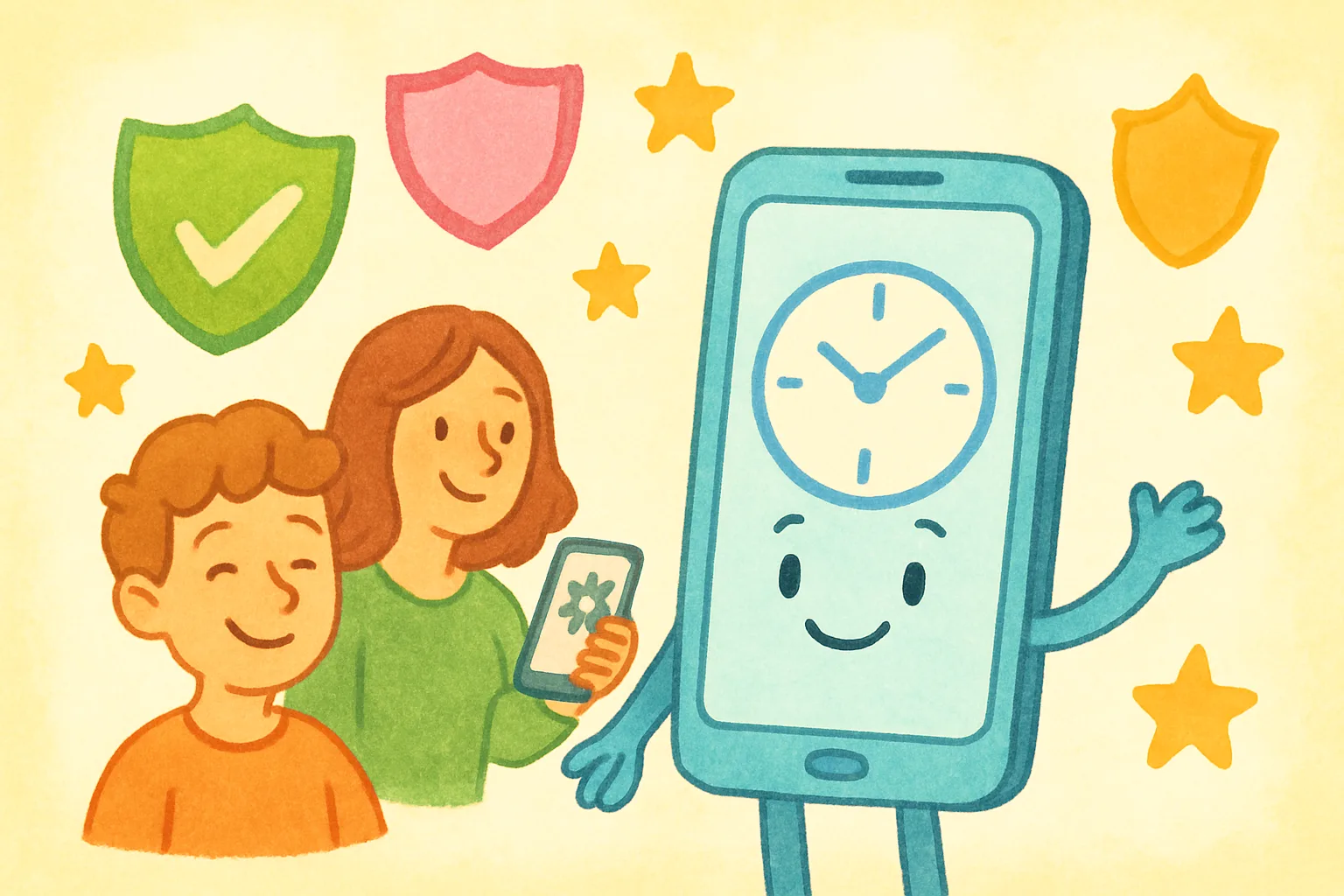
Screen Time Showdown! Meta Must Add Big New Safety Rules for Teens
Quick Summary
The company that owns Instagram and Facebook agreed to pay up to $18 billion and add strong new safety rules for kids and teens. The deal was reached with nearly every U.S. state. It means teenagers will soon face new daily limits and nighttime blocks on both apps.
What Happened?
Imagine your favorite video game automatically pausing after two hours and saying, “You’ve hit your limit for today — come back tomorrow.” Starting soon, that is roughly what Instagram and Facebook will do for users under 18.
On Wednesday, August 26, the company Meta — which owns both Instagram and Facebook — reached a landmark legal agreement with attorneys general from 48 U.S. states. A group of states had sued Meta, saying the apps were designed in ways that made them hard for young people to stop using, and that this was hurting kids’ mental health.
Meta agreed to pay up to $18 billion over 10 years as part of the deal. That is a staggering sum — enough money to buy roughly 18 billion candy bars. But the payment is only half the story. The bigger news may be all the new rules Meta must follow.
Here is what will change for anyone under 18 using Instagram or Facebook:
Two-hour daily limit. Teens will have a combined two-hour limit across both apps. Once the limit is reached, the apps lock. Only a parent can unlock more time.
Night Mode. Between midnight and 6 a.m., the apps will be completely blocked. No scrolling, no posting, no watching videos in the middle of the night.
School Mode. Notifications will be muted between 8 a.m. and 3 p.m. during school hours.
Check-in reminders. The apps will send a reminder every 15 minutes of continuous use — like a gentle tap on the shoulder saying, “Hey, you’ve been on for a while.”
Cleaner feeds. Teens will be able to set their feed to show posts in simple time order, instead of having an algorithm decide what they see.
The deal still needs a judge’s approval before it goes into full effect.
Why Does It Matter?
Social media can be fun and useful. But researchers have found that spending too many hours scrolling — especially late at night — can make it harder to sleep, study, and feel good. Many families have wished apps had better built-in tools to help manage screen time.
This settlement is one of the biggest steps any country has taken to hold social media companies responsible for how their apps affect young users. It also calls on other companies like TikTok and YouTube to add similar protections.
Big Words
- Settlement — an agreement to end a legal dispute, often involving a payment and promised changes
- Attorney general — the top law enforcement official for a U.S. state, similar to a state’s top lawyer
- Algorithm — a set of computer instructions that decides what you see in a social media feed, based on what you have liked or watched before
- Mental health — a person’s emotional and psychological well-being — how we think, feel, and handle daily life
- Notification — a ping or alert from an app that tries to get your attention
Fun Fact
The human brain is not fully developed until around age 25. Scientists believe the parts of the brain that control impulses — like the urge to keep scrolling — are still growing during the teen years, which is one reason screen time management matters so much for young people.
Think About It
If you could design the perfect set of safety rules for a social media app used by kids your age, what would you include? Would a two-hour limit be too much, too little, or just right?
Sources
- AP / WALB — “Meta reaches $18 billion settlement with states in landmark trial over teen social media addiction”
- NBC News — “Meta agrees to settle social media addiction claims with states for up to $18 billion”
- TechCrunch — “Meta agrees to sweeping changes to restrict kids’ access to its apps as part of settlement with states”
- MacRumors — “Meta Agrees to Limit Teens’ Time on Facebook and Instagram”