
The Ancient City That Did the Impossible: The Bigger It Got, the Fairer It Became!
Quick Summary
Scientists have been studying a 4,000-year-old city called Mohenjo-daro. They discovered something surprising. As the city grew bigger and richer, the gap between its wealthiest and poorest families actually shrank. That’s the opposite of what historians usually see in ancient cities!
What Happened?
Researchers from the University of York in England dug into old records from Mohenjo-daro, a city that thrived between about 2600 and 1900 BCE — that’s roughly 4,000 years ago. The city sat in what is now Pakistan and was part of the Indus Valley Civilization, one of the earliest great civilizations on Earth.
The scientists had a clever idea. They looked at house sizes across the city. A bigger house usually means a wealthier family. By measuring and comparing thousands of homes, they could get a picture of how equal — or unequal — the city was.
They used a measuring tool called a Gini coefficient. It’s a number between 0 and 1. A score of 0 means everyone has exactly the same. A score of 1 means one person owns everything. Mohenjo-daro scored about 0.44 overall. Other ancient cities — like Mesopotamia’s Ur or the Greek palace at Knossos — scored between 0.6 and 0.86. Those cities had much bigger gaps between rich and poor.
But here’s the most exciting part. As Mohenjo-daro grew older and more successful, its score actually went DOWN — from 0.39 to as low as 0.23. That’s as equal as a tiny farming village! In most places we study, cities get more unequal over time. A few powerful rulers grab more and more wealth. Mohenjo-daro did the opposite.
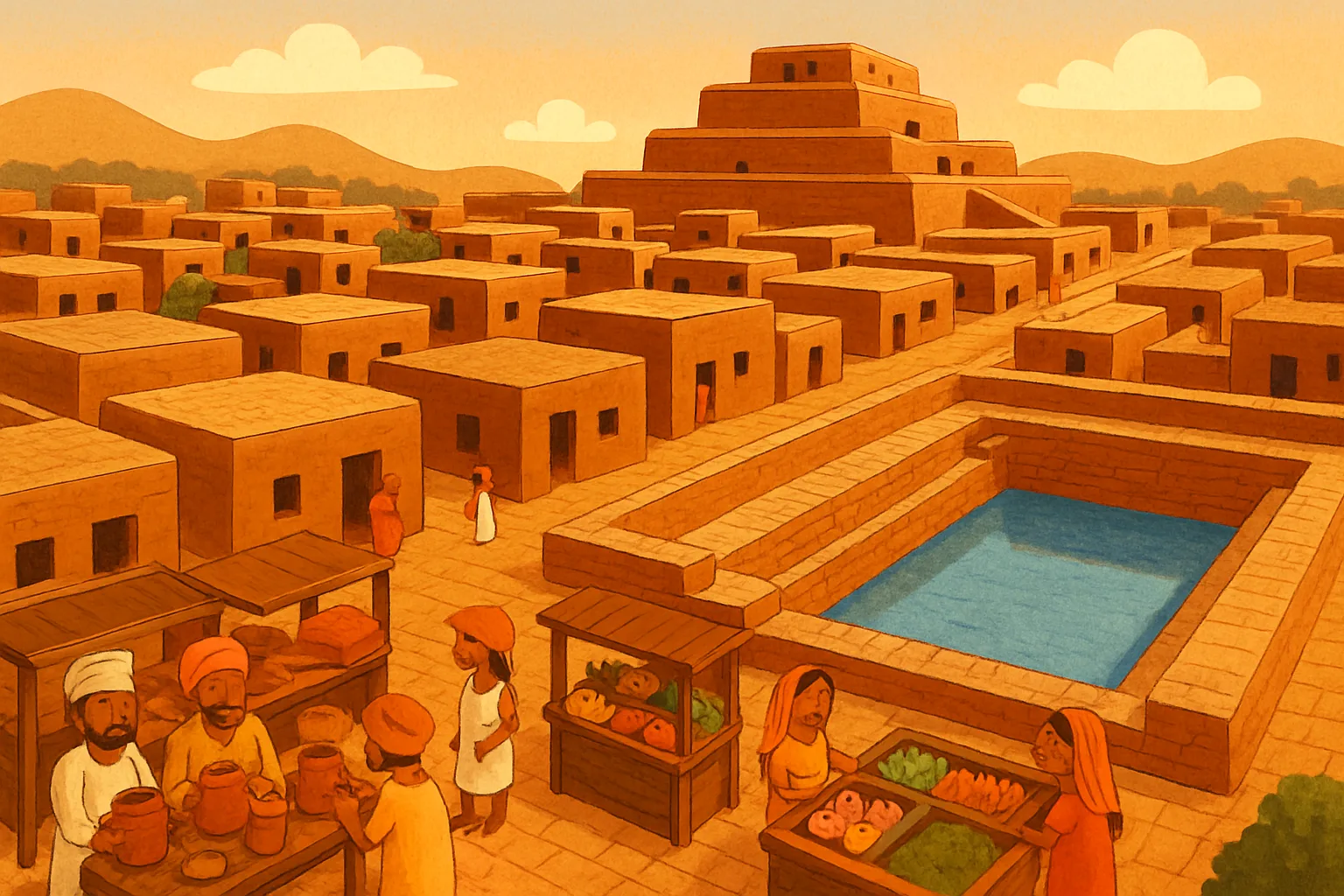
Why? The researchers believe the city’s people shared resources fairly. Instead of building giant palaces for kings, they built public drains and organized streets for everyone. Trade tools called Indus seals — small carved stamps used to track goods — were found in ordinary homes across the city, not hoarded in one ruler’s palace. This hints that many people took part in trade, not just a powerful few. No palaces, no royal tombs, no statues of rulers have ever been found at Mohenjo-daro. This city ran itself differently.
The findings were published in a scientific journal called Antiquity and were highlighted this week by research news outlets.
Why Does It Matter?
For a long time, historians thought that when cities get bigger, inequality always grows — that it’s just the natural pattern of history. Mohenjo-daro is proof that isn’t always true. A society can grow more advanced AND more equal at the same time. Scientists say this ancient city holds lessons worth thinking about even today.
Big Words
- Civilization — a large, organized society with cities, writing, and complex systems of government and trade
- Gini coefficient — a number scientists use to measure how equally or unequally wealth is spread in a society
- Inequality — when wealth, opportunities, or resources are not shared fairly among people
- Indus Valley — an ancient region around the Indus River (in present-day Pakistan and India) where one of the world’s first great civilizations developed
- Egalitarian — describing a society where everyone is treated as equal and differences in wealth are small
Fun Fact
Mohenjo-daro had one of the ancient world’s most sophisticated sewer systems. Nearly every home had its own bathroom connected to brick-lined drains running under the streets — something many cities in Europe wouldn’t have for thousands of years!
Think About It
Mohenjo-daro seemed to stay fair by investing in things that helped everyone — like clean water, good streets, and open trade. If you were designing a brand-new city today, what would you build first to make sure it was fair for everyone?
Sources
- University of York / EurekAlert — Study reveals one of world’s first cities prospered as wealth-gap shrank (May 2026)
- ScienceDaily — This 4,000-year-old city defied the rules of history (July 30, 2026)
- Ancient Origins — How a 4,000-Year-Old City Defied History’s Rules by Becoming More Equal (May 2026)
- Archaeology Magazine — 4,000-year-old Mohenjo-daro study finds ancient city grew more equal over time (May 2026)