
Light Switch for the Brain! Scientists Win the Nobel Prize for a Mind-Blowing Discovery
Quick Summary
Three scientists just won the world’s most famous science award — the Nobel Prize in Medicine. They discovered a way to switch brain cells on and off using flashes of light. This tool is already helping scientists understand the brain better than ever before.
What Happened?
Every year in October, the Nobel Prizes are given to people who have changed the world through science. This year’s Nobel Prize in Physiology or Medicine went to three researchers: Karl Deisseroth from Stanford University in the United States, and Peter Hegemann and Georg Nagel from Germany.
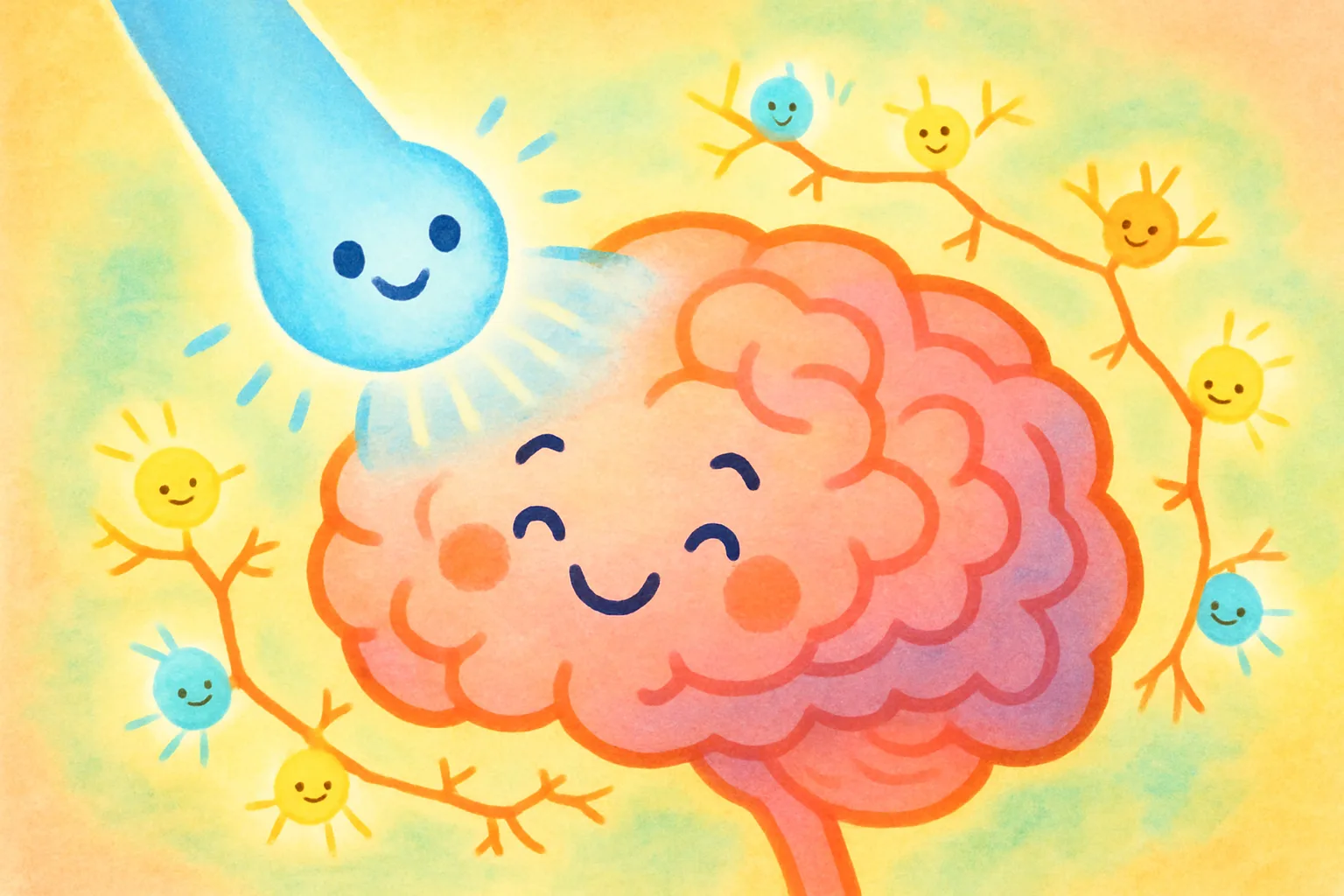
These three scientists invented something called optogenetics. It sounds like a big word, but here is what it really means: imagine your brain cells are tiny light switches. Normally, scientists could not flip those switches one at a time. With optogenetics, they can — by shining a beam of light.
The discovery started in an unexpected place: a tiny green pond plant called Chlamydomonas. This alga loves light. It swims toward it whenever the sun is shining. Hegemann and Nagel studied how the plant does this. They found a special protein in its cells that acts like a tiny door. When light hits the door, it swings open and lets electricity flow through the cell.
Deisseroth then had a brilliant idea. He put that same light-sensitive protein into brain cells from rats. Then he shone blue light into the brain using a very thin fiber, like a tiny glowing straw. When the light hit those cells, they switched on. When the light turned off, they switched off. For the first time ever, scientists could control exactly which brain cells were active — and which were not. It was like having a TV remote for the brain.
Before this invention, scientists could only watch the brain work. Now they could test it. That is a huge leap forward.
Why Does It Matter?
Optogenetics has already helped scientists learn how the brain controls movement, memory, sleep, and feelings. Doctors hope it could one day lead to new treatments for conditions like Parkinson’s disease, depression, and blindness.
The Nobel Prize comes with a cash award of 12 million Swedish kronor — about $1.2 million — which the three scientists will share equally.
Big Words
- Optogenetics — a science tool that uses light to switch individual brain cells on or off
- Neuron — a brain cell that carries messages through the nervous system
- Protein — a tiny building block inside cells that does specific jobs, like opening a door when light hits it
- Nobel Prize — the most famous science award in the world, given every year in Stockholm, Sweden
- Ion channel — a tiny gate in a cell wall that opens to let electric signals pass through
Fun Fact
Chlamydomonas — the tiny alga that started it all — is so small that about 50 of them could fit side by side across the width of a single human hair!
Think About It
If scientists could control any single brain cell with a flash of light, which mystery of the brain would you most want them to solve first?
Sources
- STAT News — 2026 Nobel Prize in Medicine awarded for brain research tool called optogenetics
- CBC News — Nobel Prize in Medicine awarded to scientists who pioneered work in optogenetics
- Scientific American — 2026 Nobel Prize in Physiology or Medicine awarded to Karl Deisseroth, Georg Nagel and Peter Hegemann
- Nature — Medicine Nobel awarded for brain ‘switch’ that controls neurons with light
- Al Jazeera — Nobel medicine prize honours US and German scientists for optogenetics work