
The Ocean Just Broke a Temperature Record — And Scientists Are Watching Closely
Quick Summary
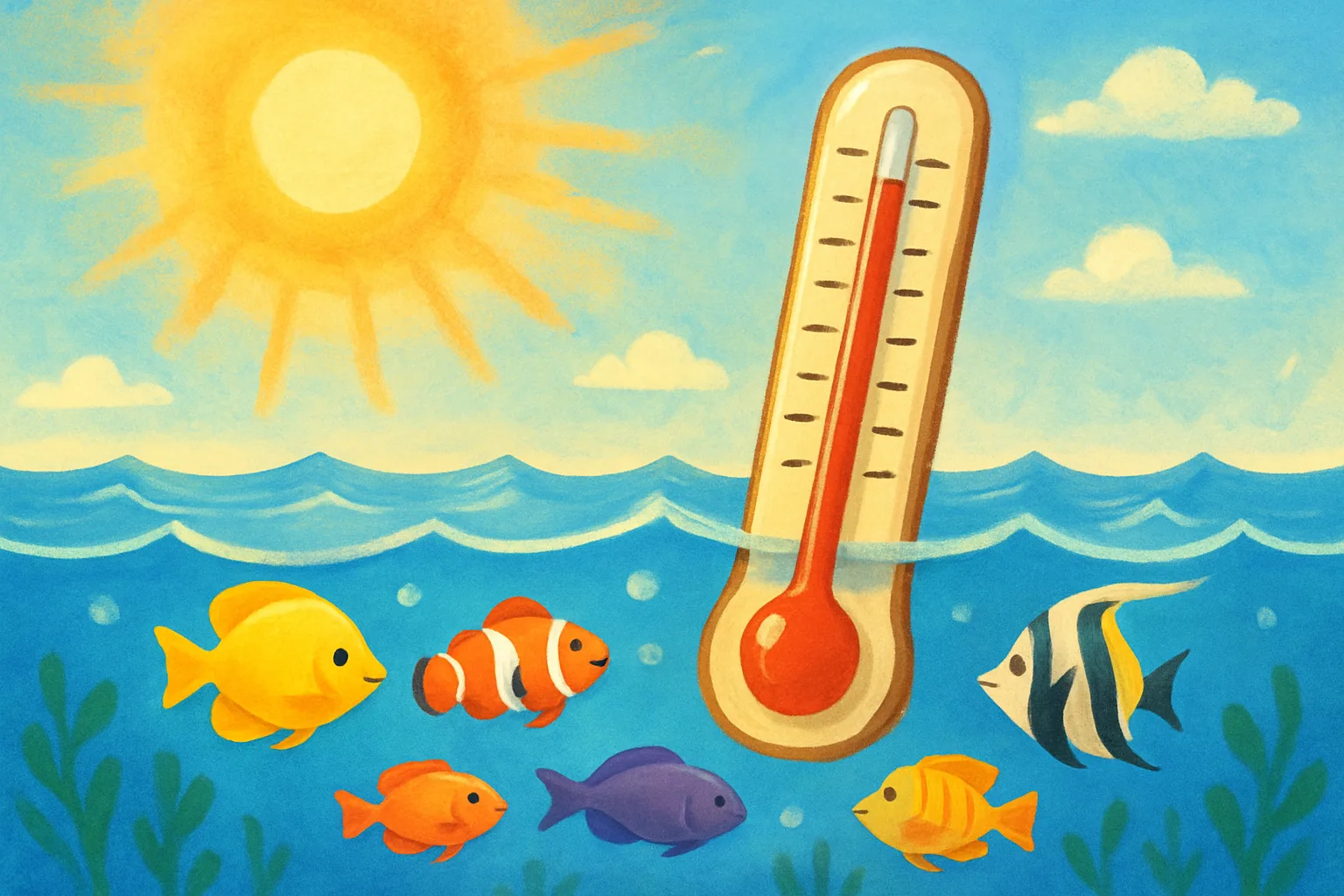
The world’s oceans broke an all-time heat record on August 22, 2026. Scientists in Europe tracked the new high using satellites and special computer systems. A weather pattern called El Niño helped push the temperature to its highest point ever recorded.
What Happened?
Every day, a team of European scientists measures how warm the world’s oceans are. They watch the part of the ocean that stretches from 60 degrees north to 60 degrees south — basically, every sea except right at the North and South Poles.
On August 22, that measurement hit 21.1 degrees Celsius. That is about 70 degrees Fahrenheit — roughly the temperature of a cool swimming pool. It doesn’t sound extreme, but for the whole ocean all at once, it is enormous. It beat the previous record, which was set in March 2024.
Here’s what makes this extra surprising. Ocean temperatures usually peak in March and April, after summer ends in the Southern Hemisphere. August is supposed to be a time when oceans are cooling down. Scientists say finding a record in August — the wrong time of year — is what makes this so unusual.
Two big things pushed the ocean this hot. First, decades of greenhouse gas pollution have slowly warmed the oceans over time. Think of it like slowly turning up the stove under a giant pot of water. Second, a weather pattern called El Niño has arrived in the Pacific Ocean. El Niño works like a booster button — it shifts warm water around and heats up large parts of the sea even more.
The Copernicus Climate Change Service, run by scientists at a European weather center, announced the record on August 24. They said they would keep watching to see whether temperatures stay this high or slowly drop back down.
Why Does It Matter?
A warmer ocean affects everyone — even people who live far from the beach. When ocean water heats up, it evaporates faster and can make storms stronger and rainfall heavier. Warmer water also makes it harder for the ocean to absorb carbon dioxide from the air. Carbon dioxide is one of the gases that traps heat on Earth, so less ocean absorption means more warming.
For sea creatures, it’s a big deal too. Fish, coral, and other animals depend on certain water temperatures to stay healthy. When the ocean gets too warm, coral can turn white and die — a process called bleaching. Scientists are keeping a close eye on coral reefs and fisheries around the world right now.
The good news is that scientists have powerful tools to track all of this. The Copernicus system watches ocean temperatures every single day. That means researchers can spot changes quickly and help communities prepare.
Big Words
- El Niño — a natural weather pattern in the Pacific Ocean where warm water spreads eastward, heating up global air and sea temperatures
- Sea surface temperature — the warmth of the top layer of the ocean, measured by satellites and buoys floating at sea
- Greenhouse gases — gases like carbon dioxide that trap heat in Earth’s atmosphere, similar to how glass traps warmth inside a greenhouse
- Marine heatwave — a stretch of time when a part of the ocean stays unusually hot, much like a heat wave on land but underwater
- Copernicus — a European space and science program that uses satellites to monitor Earth’s climate, oceans, and atmosphere
Fun Fact
The ocean covers more than 70% of Earth’s surface — so when scientists measure the average ocean temperature, they are averaging an area nearly twice the size of all the world’s continents combined!
Think About It
If the ocean is like Earth’s giant sponge for heat and carbon dioxide, what do you think happens to our weather when that sponge gets too full?
Sources
- Copernicus Climate Change Service / ECMWF — Daily global sea surface temperatures break all-time record, August 24, 2026
- Al Jazeera — Global ocean temperatures hit record high as El Niño intensifies, August 25, 2026
- Down to Earth — Global ocean records hottest day ever, August 25, 2026
- The Watchers — Global sea surface temperature sets new record, August 25, 2026