
Born From Ashes! Astronomers Find a Planet That Rose From Its Dead Star
Quick Summary
Astronomers have found a brand-new kind of planet unlike anything ever seen before. They are calling it a “phoenix planet.” It appears to have been born from the leftover materials of its own dying star. The discovery was published in the science journal Nature Astronomy and is exciting scientists around the world.
What Happened?
You may know the legend of the phoenix — a magical bird that dies in a blaze of fire and then rises again from its own ashes. Scientists just found something in space that works the same way.
A team of astronomers at the University of Warwick in England was studying a dead star called HS 0209+0832. It sits about 270 light-years from Earth, near a group of stars called Cetus. One light-year is about 6 trillion miles — so this star is very, very far away.
This dead star is what scientists call a white dwarf. A white dwarf forms when a star like our Sun uses up all its fuel and collapses into a tiny, incredibly hot ball. Imagine squishing something the size of the Sun down to the size of a city — that is a white dwarf.
When the team studied the white dwarf’s atmosphere, they found something unexpected. It was packed with rare metals like zinc, copper, and niobium — about 1,000 times more than the Sun has. That told scientists something was feeding material into the dead star.
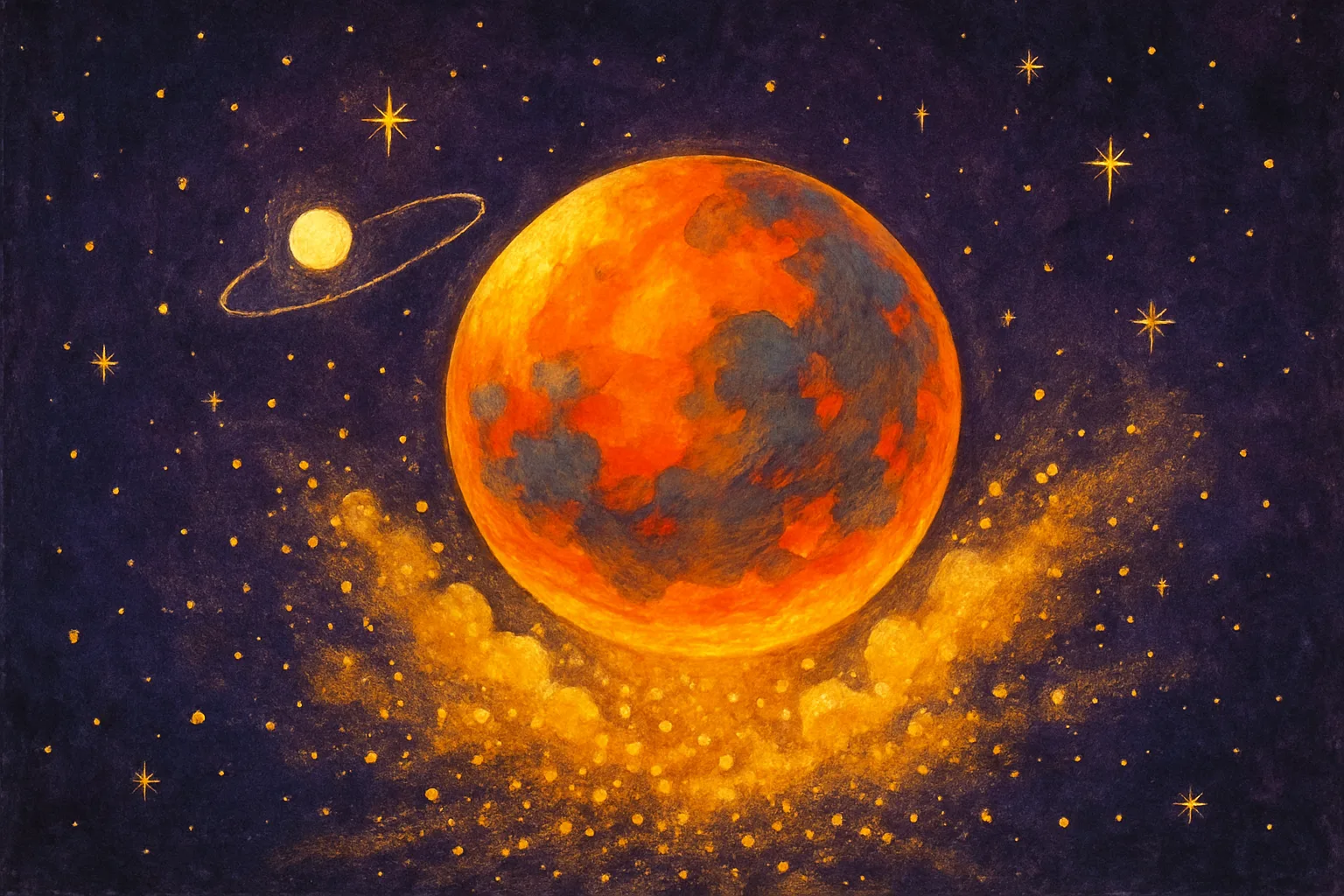
The answer? A planet. Not just any planet — a second-generation planet. This world appears to have formed after the star died, built from the very dust and debris the star flung out as it collapsed. The planet now orbits the white dwarf and is slowly being pulled apart, raining its material back onto the star’s surface.
“Second-generation planets are worlds that form out of the material a star casts off as it dies,” said lead author Jamie Williams. “Finding one around a white dwarf was completely unexpected. It’s a bit like finding a planet that has risen from the ashes of the very star it once orbited.”
This is the first time scientists have ever spotted this kind of planet around a white dwarf. It took years of careful observation to figure out what was happening.
Why Does It Matter?
Our own Sun will one day — in about 6 billion years — burn out and become a white dwarf. This discovery gives scientists a preview of what our solar system might look like far in the future. It also shows that planets can form in places nobody expected, which means there could be many more of these “phoenix worlds” waiting to be found.
Big Words
- White dwarf — the small, hot remains of a dead star that has used up all its fuel; about the size of Earth but packed with enormous mass
- Second-generation planet — a planet that forms after its star has already died, built from the star’s leftover materials
- Atmosphere — the layer of gases (or other material) surrounding a star or planet
- Light-year — the distance light travels in one year — about 6 trillion miles, or like driving around Earth 236 million times
Fun Fact
White dwarfs are much more common in our galaxy than pulsars (another type of dead star). That means there could be many more phoenix planets hiding around the white dwarfs nearby — scientists just never knew to look for them before!
Think About It
If a whole new planet can form from the ashes of a dead star, what does that tell you about how creative and surprising the universe can be?
Sources
- Space.com — ‘Completely unexpected’ Phoenix planet was born from the ashes of a dying star
- Live Science — ‘Completely unexpected’: Astronomers spy never-before-seen ‘phoenix planet’ rising from the ashes of a dead star
- Reuters / Tribune — Alien ‘phoenix planet’ was born from the ashes of a dying star
- The Debrief — Astronomers Find Evidence of a ‘Phoenix Planet’ Born From the Remains of Its Dead Star (Nature Astronomy)