
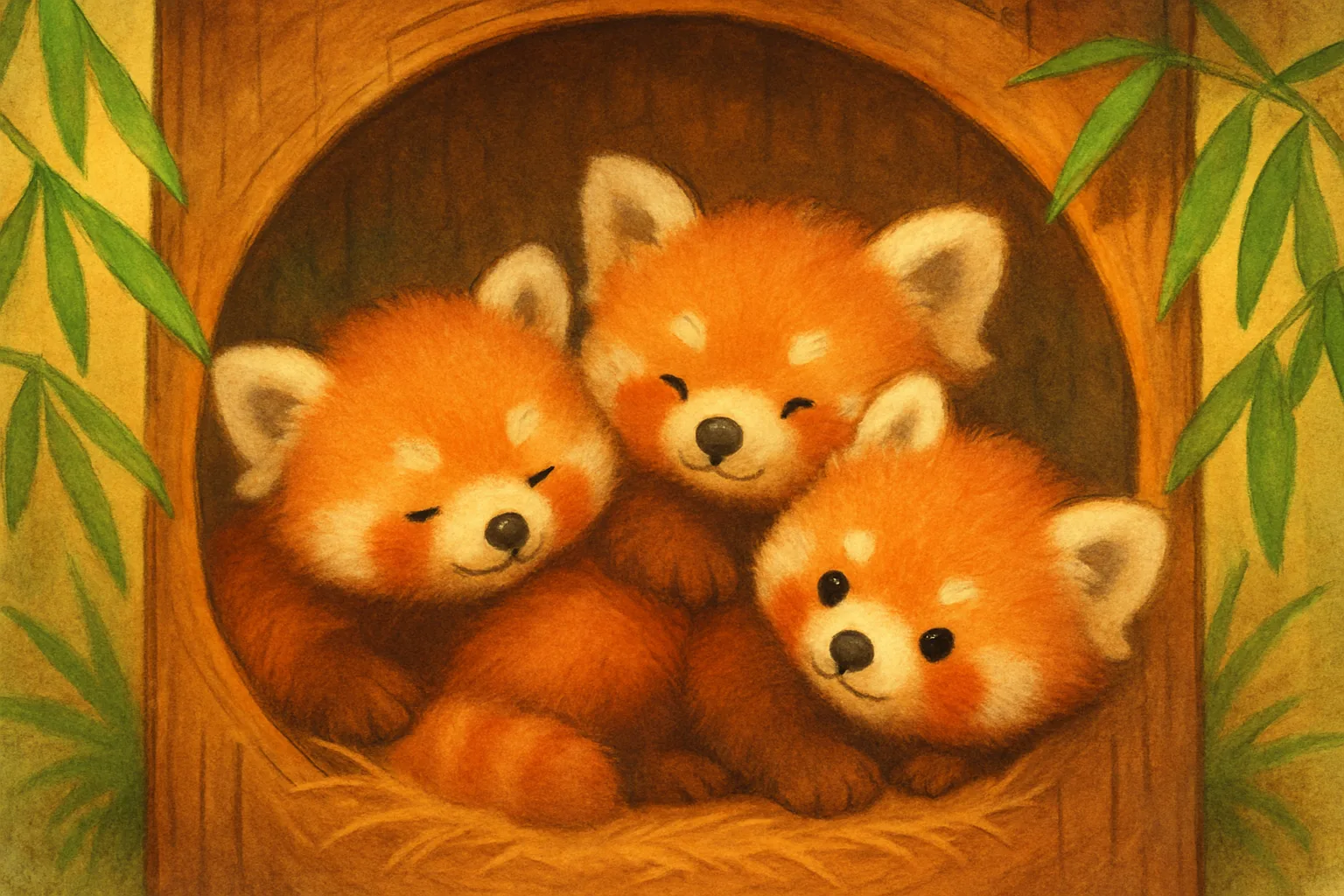
Fluffy and Fierce! Three Endangered Red Panda Cubs Are Born at the Smithsonian
Quick Summary
This summer, three tiny red panda cubs were born at the Smithsonian’s National Zoo and Conservation Biology Institute in Virginia. Red pandas are an endangered species, so every new cub is a big win for the whole species. The zoo announced the happy news this week!
What Happened?
The Smithsonian’s Conservation Biology Institute, located in Front Royal, Virginia, welcomed not one, not two, but three red panda cubs this summer.
Two of the cubs — one boy and one girl — were born on May 29 to a three-year-old mother named Sequoia. Their dad is a 12-year-old male named Mow Mow. Less than two weeks later, on June 11, a third cub arrived! She was born to another mother named Keahi, age 3, and her dad is a seven-year-old male named Rocket.
The cubs are being watched around the clock via cameras placed inside special nest boxes. The cameras let staff keep a close eye on the babies without disturbing the moms. Keepers say the young ones are doing what brand-new baby animals do best: eating and sleeping.
Red pandas are not actually closely related to giant pandas. They are more like their own special kind of animal, related to weasels and raccoons. They have bushy ringed tails, rusty red fur, and a black-and-white face. A grown-up red panda is roughly the size of a house cat — so these newborn cubs are incredibly tiny!
Why Does It Matter?
Red pandas are listed as an endangered species. That means their numbers in the wild are dangerously low and they could disappear from the planet without help.
Wild red pandas live mainly in the mountain forests of China, Nepal, India, Bhutan, and Myanmar. Their populations keep shrinking because forests are being cut down, and because some red pandas are illegally captured. Disease spread by domestic dogs is also a threat.
When zoos breed red pandas and share genetic information between them, it helps keep the species healthy and diverse — like a backup plan for nature. The Smithsonian’s team carefully matches breeding pairs to make sure the cubs are as genetically healthy as possible.
Every new cub born in a zoo is one more red panda contributing to the survival of its species.
Big Words
- Endangered — when a species has so few individuals left that it risks dying out completely
- Conservation — protecting animals, plants, and nature so they can survive for future generations
- Species Survival Plan — a program where zoos across North America cooperate to breed rare animals carefully, keeping populations healthy and genetically diverse
- Genetic diversity — having lots of different gene combinations in a population, which helps animals stay healthy and resist disease
- Nest box — a cozy enclosed shelter where animal mothers can give birth and raise their young safely
Fun Fact
Red pandas are amazing climbers! They have a special “false thumb” — a wrist bone that works almost like an extra finger — which helps them grip bamboo stalks and tree branches. Giant pandas have the exact same trick, even though the two animals aren’t closely related. It’s a case of nature finding the same clever solution twice!
Think About It
If you were a zookeeper helping to save red pandas, what would be the most important thing you’d want people to know about why these animals are worth protecting?
Sources
- Smithsonian’s National Zoo and Conservation Biology Institute (nationalzoo.si.edu) — Animal News, August 18, 2026
- Northern Virginia Magazine — 3 Red Panda Cubs Born at Smithsonian’s Conservation Biology Institute