
Feathered Lifeguards! Scientists Discover That Seabirds Are Secretly Saving Coral Reefs
Quick Summary
Coral reefs are in trouble around the world. But scientists just found a surprising hero hiding in plain sight: seabirds. At a remote Pacific island called Palmyra Atoll, researchers discovered that birds are one of the best defenses a coral reef can have.
What Happened?
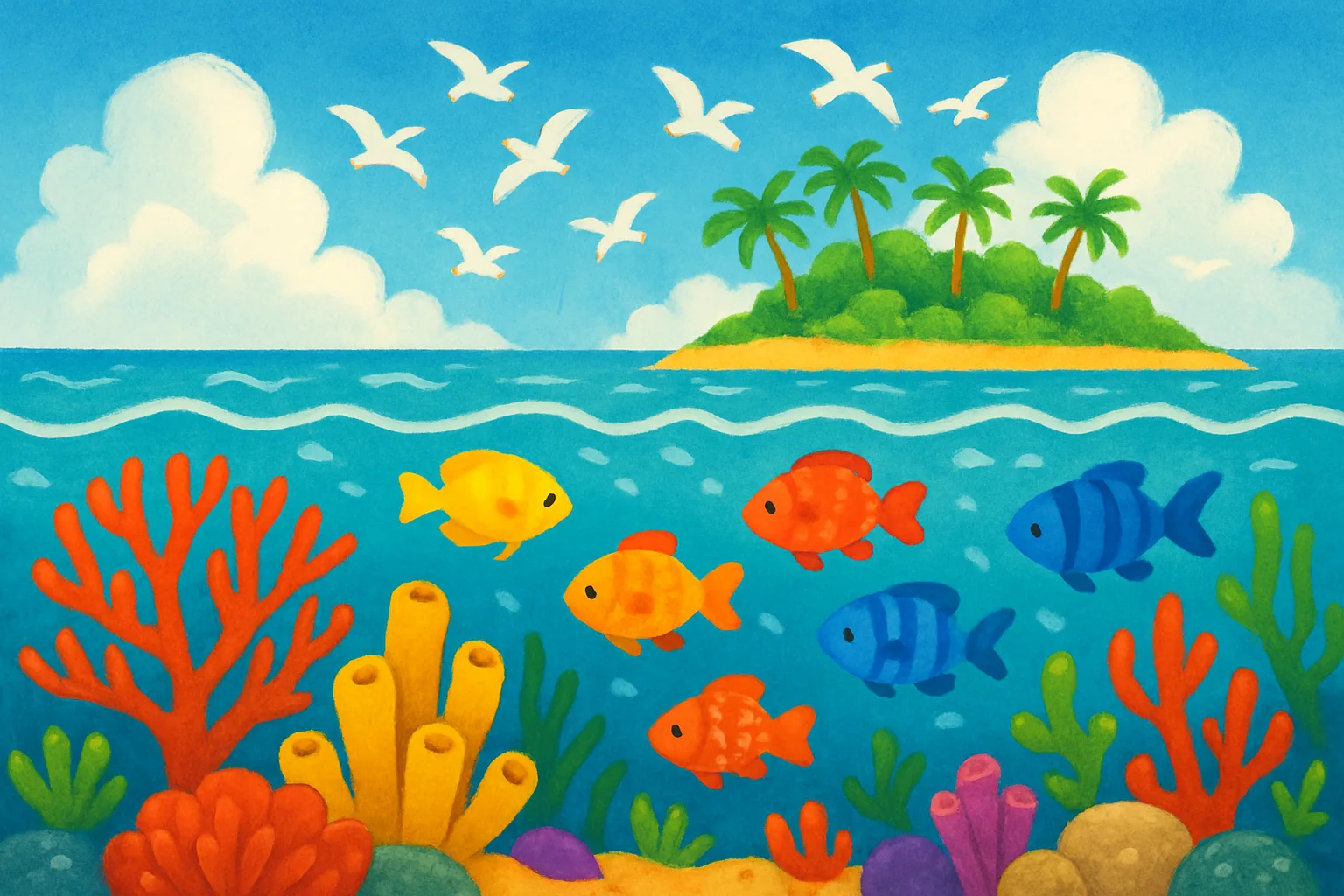
Palmyra Atoll sits in the middle of the Pacific Ocean, far from cities or pollution. Its coral reefs are some of the most spectacular on Earth — full of colorful fish and coral bigger than a car. And tens of thousands of birds, like red-footed boobies and white terns, nest on the island.
Scientists from The Nature Conservancy went to Palmyra to figure out what makes these reefs so healthy. What they found surprised them.
The secret weapon? Bird droppings — also called guano.
When birds eat fish from the ocean and then return to the island, their droppings are packed with nutrients. Rain washes those nutrients from the land into the sea. The nutrients then feed tiny ocean plants called plankton. Plankton feed small fish. Small fish feed bigger fish. And all of those animals help keep the reef buzzing with life.
Think of it like adding fertilizer to a garden. The bird droppings act as a natural food boost for the whole underwater neighborhood.
On other islands where rat infestations and habitat loss have driven away seabirds, scientists noticed that the surrounding reefs were not as healthy. With fewer birds, fewer nutrients reached the ocean. The whole food web was weakened.
The researchers say that protecting seabird populations — and removing the invasive rats that threaten them — could be one of the most powerful tools for saving coral reefs.
Why Does It Matter?
Coral reefs are home to about 25% of all ocean species, even though they cover less than 1% of the ocean floor. They are like underwater cities. But rising ocean temperatures from climate change are damaging reefs all over the world.
This discovery gives scientists a new hope. If seabirds can be brought back to islands where they have disappeared, the reefs nearby could recover too. It shows that nature has its own repair system — if people give it a chance.
Scientist Alex Wegmann of The Nature Conservancy explained that if the birds around all Pacific atolls were added up, they cover an area of ocean roughly the same size as the entire continent of South America. Protecting these birds means protecting an enormous stretch of ocean.
Big Words
- Coral reef — an underwater structure built by tiny animals called coral polyps, which creates a home for a huge variety of ocean life
- Guano — the droppings of seabirds or bats, which are rich in nutrients and can act as a natural fertilizer
- Nutrient — a substance that living things need to grow and stay healthy, like the vitamins in food
- Ecosystem — a community of living things — plants, animals, and tiny organisms — all connected and depending on each other
- Invasive species — a plant or animal that moves into a new area where it did not originally live, often causing harm to animals already there
Fun Fact
Roughly 100,000 sooty terns nest on Palmyra Atoll alone! The birds spend years flying over the open ocean before returning to the island to raise their chicks.
Think About It
Can you think of another surprising way two completely different types of animals might help each other survive?
Sources
- NPR — One way to protect coral reefs? Bring back seabirds
- WBGO/NPR — One way to protect coral reefs? Bring back seabirds
- Texas Public Radio (TPR)/NPR — Some of the most pristine coral reefs have a secret weapon: birds