
Scientists Built a Brand-New Living Cell From Scratch — And Named It SpudCell!
Quick Summary
Scientists at the University of Minnesota created the world’s first fully synthetic cell. They built it entirely from non-living chemical parts — like assembling a tiny robot from spare pieces. The cell can feed itself, grow, and even make copies of itself!
What Happened?
Every living thing on Earth — from a blade of grass to a blue whale — is made of cells. Cells are the tiniest building blocks of life. For billions of years, every cell that ever existed came from another cell. No one had ever built a working cell from scratch, using only non-living chemicals.
Until now.
Researchers led by scientist Kate Adamala at the University of Minnesota built something they call SpudCell. The name is a nod to Sputnik, the first satellite launched into space back in the 1950s — because, just like that satellite, SpudCell is a first of its kind.
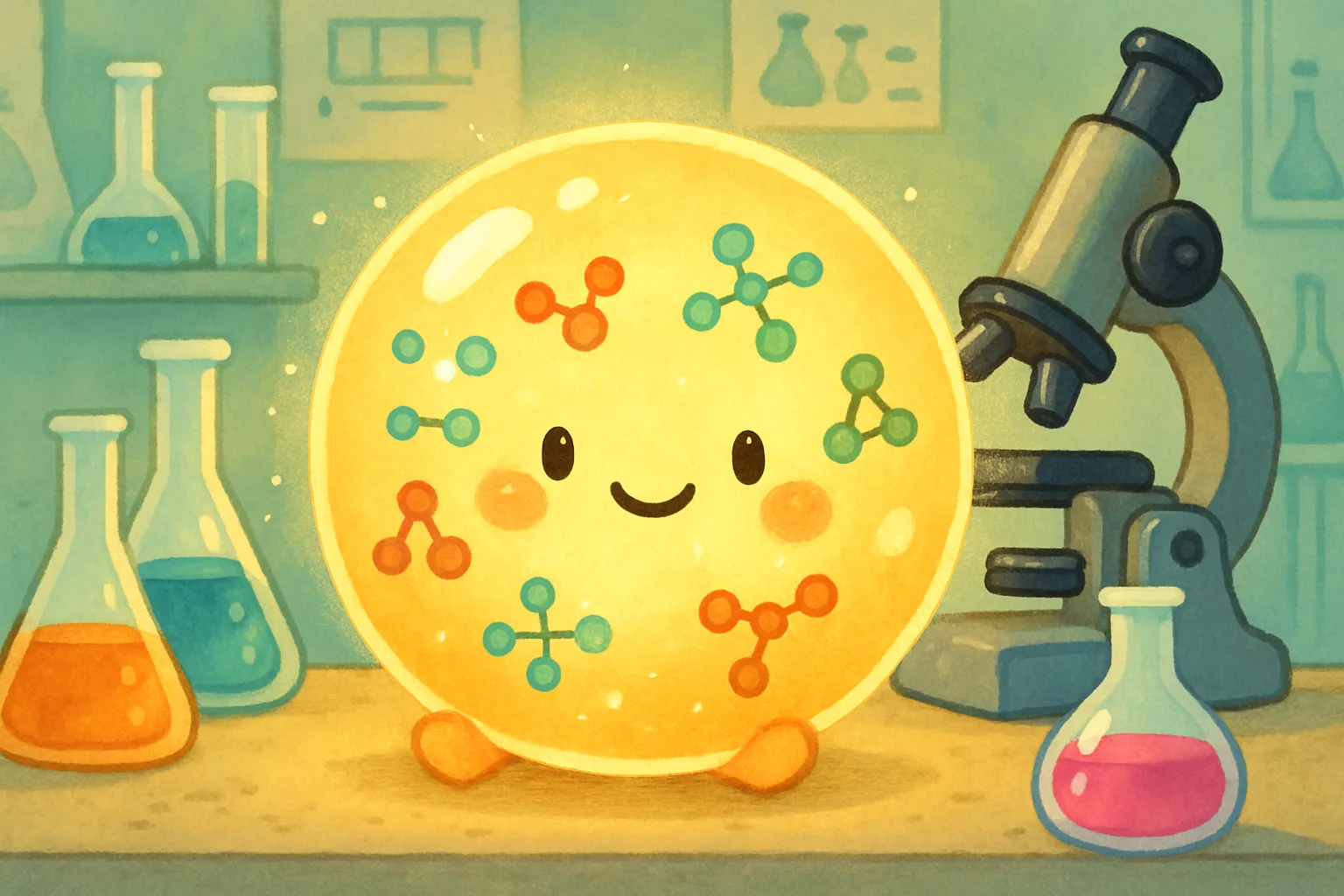
Here is what makes SpudCell so amazing: the scientists took between 150 and 200 molecules and put them together inside a tiny bubble with a thin outer wall, called a membrane. Think of it like packing a tiny lunch box with very specific ingredients. Once packed, the cell started doing something remarkable — it ate nutrients from the liquid around it, got bigger, copied its own DNA, and split into new cells!
Natural cells contain billions of molecules, so SpudCell is much simpler. It is like comparing a one-room log cabin to a giant skyscraper — both are buildings, but very different in size and complexity. Still, SpudCell can carry out the basic steps that define life: eating, growing, and reproducing.
SpudCell can run through about five generations of dividing before it runs out of energy. It needs scientists to keep feeding it supplies from the outside. It cannot survive on its own in nature, and scientists confirmed it poses no safety risks.
The research was published in a major science journal in early July 2026.
Why Does It Matter?
This is one of the biggest science breakthroughs in years. By understanding how to build a cell from scratch, scientists hope to answer one of the greatest mysteries of all time: How did life first begin on Earth, billions of years ago?
But it is not just about the past. In the future, scientists dream of building cells that act like tiny factories. Imagine cells programmed to make medicines, clean up pollution, or even heal wounds in a whole new way. SpudCell is just the first tiny step toward that incredible future.
As Adamala put it, SpudCell proves that the most basic parts of life — like growing and making copies — do not need magic. They just need the right chemistry.
Big Words
- Synthetic — something made by humans, usually from chemicals, rather than grown or found in nature
- Cell — the smallest unit of life; all living things are made of one or more cells
- DNA — a long molecule inside cells that carries the instructions for how a living thing grows and works, like a recipe book
- Membrane — a very thin, flexible wall that surrounds a cell and controls what goes in and out, like the skin of a soap bubble
- Replicate — to make an exact copy of something; cells replicate their DNA before they divide
Fun Fact
SpudCell uses a set of just 36 genes to do its job. A human cell uses around 20,000 genes! That makes SpudCell roughly 555 times simpler than you — but still incredible for something built entirely from scratch.
Think About It
If you could program a tiny synthetic cell to do one job to help the world, what would you want it to do?
Sources
- CNN — ‘Scientists say they have made a cell from scratch for first time’
- Quanta Magazine — ‘For the First Time, a Cell Built From Scratch Grows and Divides’
- ScienceAlert — ‘For The First Time, Scientists Say They’ve Built a Synthetic Cell From Scratch’
- University of Minnesota — ‘World’s first synthetic cell with a complete life cycle’