
Brain Bodyguards! Scientists Just Discovered a Secret About How Our Brains Stay Healthy
Quick Summary
Scientists at Stanford University just made a surprising discovery about the human brain. They found that as we get older, tiny defender cells from our blood actually travel into our brains to help protect them. This changes what scientists thought they knew — and could one day lead to better treatments for brain diseases.
What Happened?
For a very long time, scientists believed the brain was like a fortress. They thought it had its own special set of defender cells, and that those cells almost never let anyone from outside come in. The brain has something called the blood-brain barrier — think of it like a very strict security gate between the blood and the brain. Most things cannot get through.
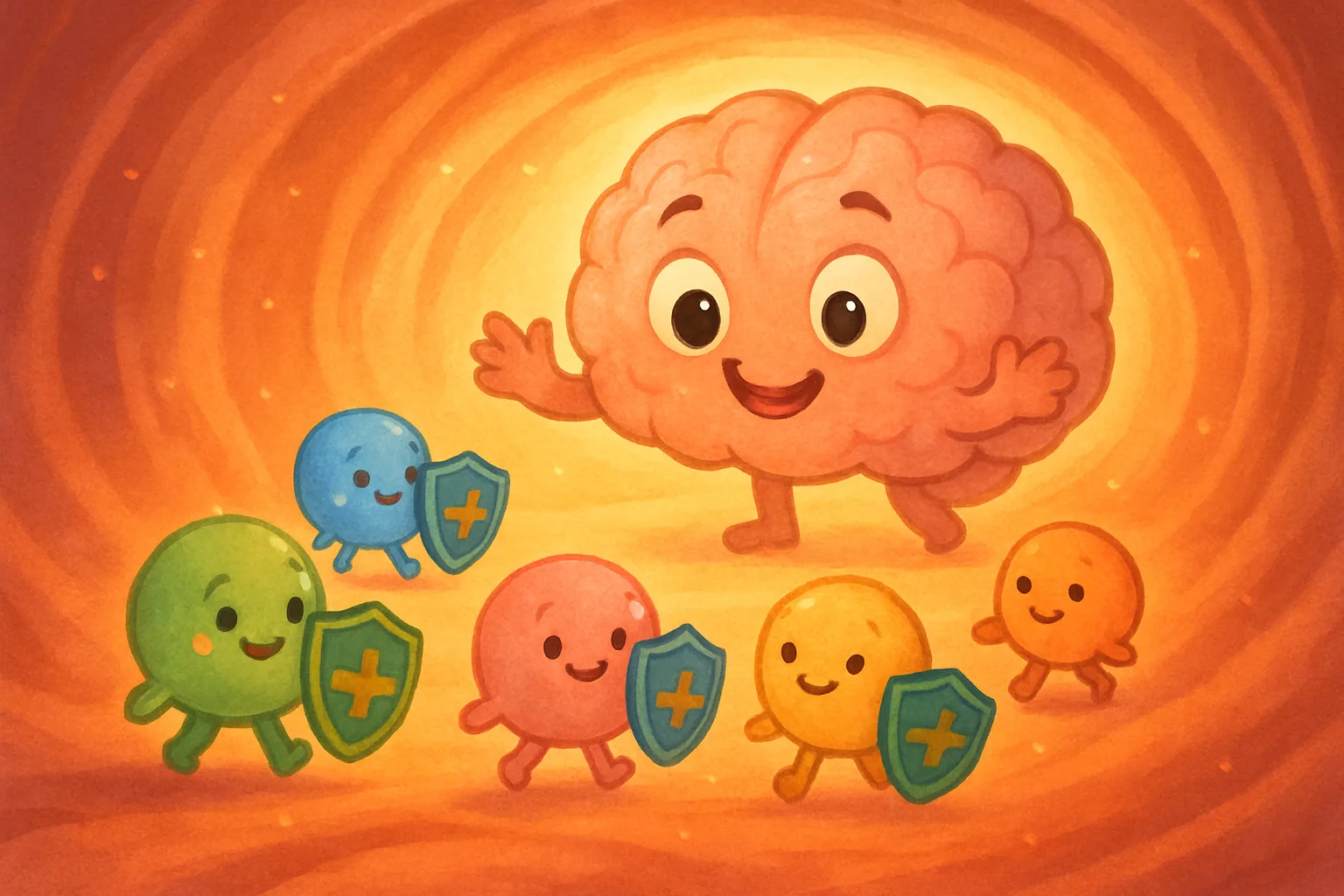
But now, researchers at Stanford University have found something totally surprising. As people age — starting around middle age — large numbers of immune cells from the blood actually push through that security gate and enter the brain.
Once inside, these cells do something even more amazing. They change shape and take on a new job. They become something called microglia — the brain’s own homegrown defenders. Imagine a firefighter from out of town arriving in a new city and becoming a full-time local firefighter there. That’s basically what these cells are doing.
The team published their discovery in the journal Nature, one of the most respected science journals in the world. They figured it out by studying DNA from both blood and brain samples and looking for matching patterns — almost like reading a family tree to see which cells were related.
Here is what makes this extra interesting: this seems to happen only in humans, not in mice or other lab animals. So it took studying actual human tissue to catch this going on.
Why Does It Matter?
Scientists hope that understanding this could help them fight diseases like Alzheimer’s, which affects memory in older people. If immune cells from the blood can get into the brain naturally, doctors might one day be able to send specially trained immune cells in to deliver medicines or fix problems.
Think of it like this: imagine your brain is a city. Now scientists know there is a hidden side door that helper cells can use. That changes everything about how they might one day send in help.
Big Words
- Immune cell — A tiny cell in your body that fights off germs, viruses, and other threats. Think of them as your body’s little soldiers.
- Blood-brain barrier — A protective wall between the blood and the brain that blocks most things from getting through, like a security checkpoint.
- Microglia — The brain’s own special immune cells. Their job is to patrol the brain and clean up anything that shouldn’t be there.
- Alzheimer’s disease — A brain illness that mainly affects older adults and slowly makes it harder to remember things and think clearly.
Fun Fact
Your brain contains about 100 billion neurons — that’s more than ten times the number of stars in our galaxy that you can see on a clear night! And the microglia defending those neurons are constantly moving around, scanning for problems.
Think About It
If your immune cells can travel all the way from your blood into your brain, what other surprising connections might exist inside your body that scientists haven’t discovered yet?
Sources
- ScienceDaily / Stanford University — Immune cells flood into the aging brain, Stanford scientists discover (Aug. 14, 2026)
- NIH Research Matters — Immune cells cross blood-brain barrier during human aging
- Stanford Report — Researchers rethink the aging brain’s immune system
- MedicalXpress — Discovery reveals aging human brains receive immune cell reinforcements from blood