
Hope for Wildlife! A Big New Report Says Tigers and Turtles Are Bouncing Back
Quick Summary
The World Wildlife Fund released its important Living Planet Report today. It found that wildlife populations around the world have fallen sharply over the past 50 years. But it also found real reasons to feel hopeful — because some animals are making impressive comebacks.
What Happened?
Every two years, the World Wildlife Fund (WWF) and the Zoological Society of London publish a huge wildlife checkup. This year’s report studied more than 35,000 populations of nearly 5,800 different species of animals. That includes mammals, birds, fish, reptiles, and amphibians.
The bad news: on average, those populations have shrunk by 73% since 1970. That is a big drop. Think of it this way — if your neighborhood had 100 squirrels in 1970, the average neighborhood today might have only about 27.
Freshwater animals had it the hardest. Fish, frogs, and river creatures saw an average drop of 85%. That is steeper than animals that live on land (down 69%) or in the ocean (down 59%).
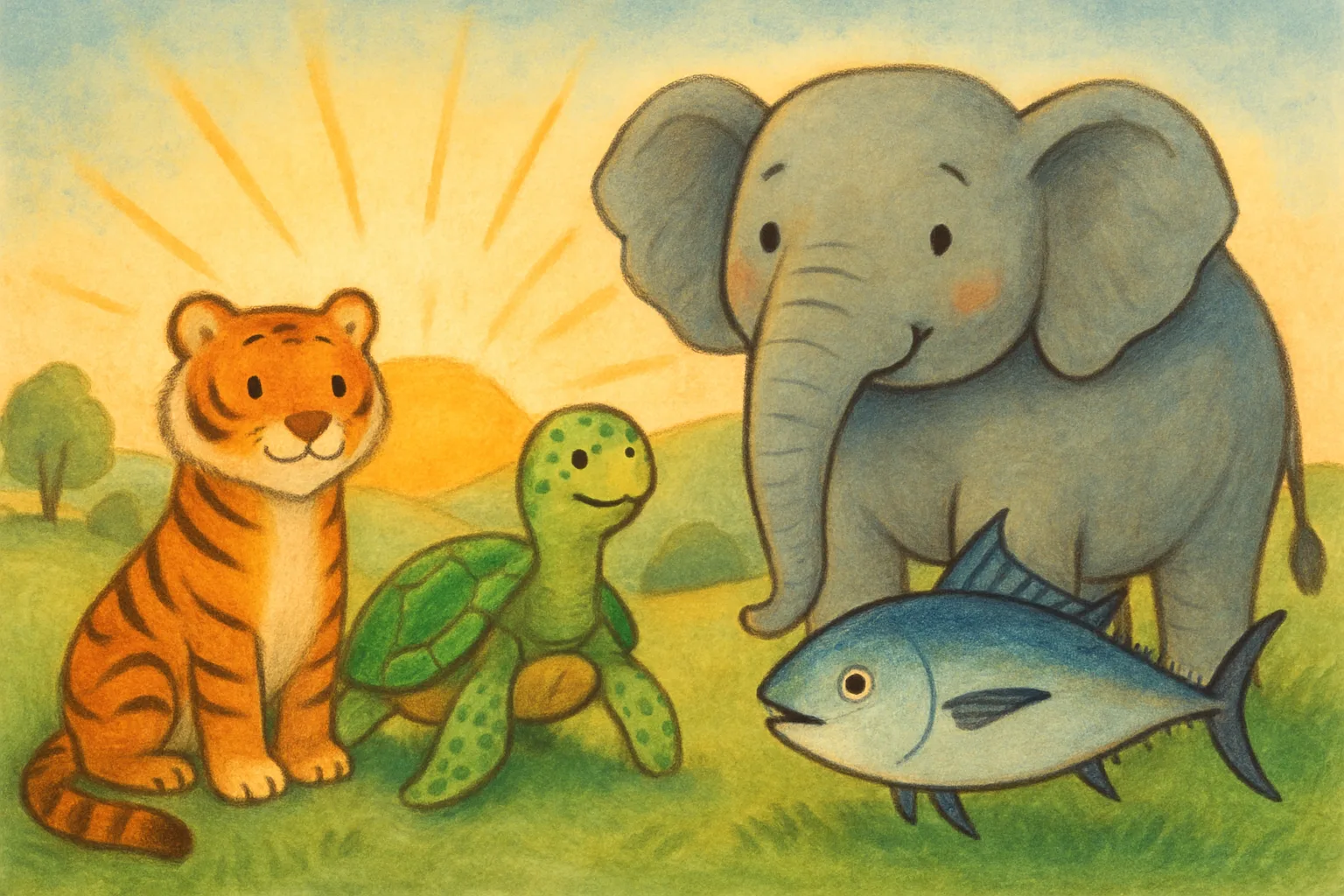
The good news — and scientists say this matters a lot — is that some species are fighting back. Here are four success stories from the report:
Tigers: In 2010, only about 3,200 wild tigers were left on Earth. By 2025, that number had grown to roughly 5,700. That is a 70% increase in just 15 years!
Green sea turtles: These ancient ocean travelers were once listed as Endangered. Conservation work helped them recover, and they are no longer on that list.
Atlantic bluefin tuna: These big, fast fish were also taken off the Endangered list after fishing limits and protection programs kicked in.
African elephants: Many elephant populations across southern and eastern Africa are now stable or growing.
Scientists say these wins prove something important: when people work together and stick with a plan, nature can recover.
Why Does It Matter?
The report is a reminder that the choices people make — about what we eat, how we use land, and how we treat wild places — have real effects on animals. It is also a reminder that those effects can be reversed. The scientists who wrote the report call it “The Science of Hope.” They say there is still time to change course, but it has to happen soon.
Big Words
- Biodiversity — the amazing variety of all living things on Earth, from tiny beetles to giant whales
- Population — all the members of one type of animal living in a particular area
- Vertebrate — an animal with a backbone, like a fish, frog, bird, or mammal
- Conservation — the work of protecting animals, plants, and wild places so they survive for the future
- Endangered — a label given to a species that is at serious risk of disappearing forever
Fun Fact
India is home to more than half the world’s wild tigers — about 3,682 of them. The country’s national parks and wildlife programs have been a big part of the tiger’s comeback story.
Think About It
If you could protect one wild animal species, which would you choose — and what is one thing people could do to help it survive?
Sources
- WWF / Discover Wildlife — WWF Living Planet Report 2026 reveals ‘rational basis for hope’
- Japan Times / Reuters — Populations of wild species fell by an average of 73% from 1970 to 2022, WWF says
- Al Jazeera — ‘Nature can recover’: Inside the race to rescue world’s crisis-hit wildlife
- 3BL Media / WWF Press Release — Wildlife Population Sizes Decline 73% on Average, but Tiger, Elephant, Turtle & Tuna Recoveries Offer Hope