
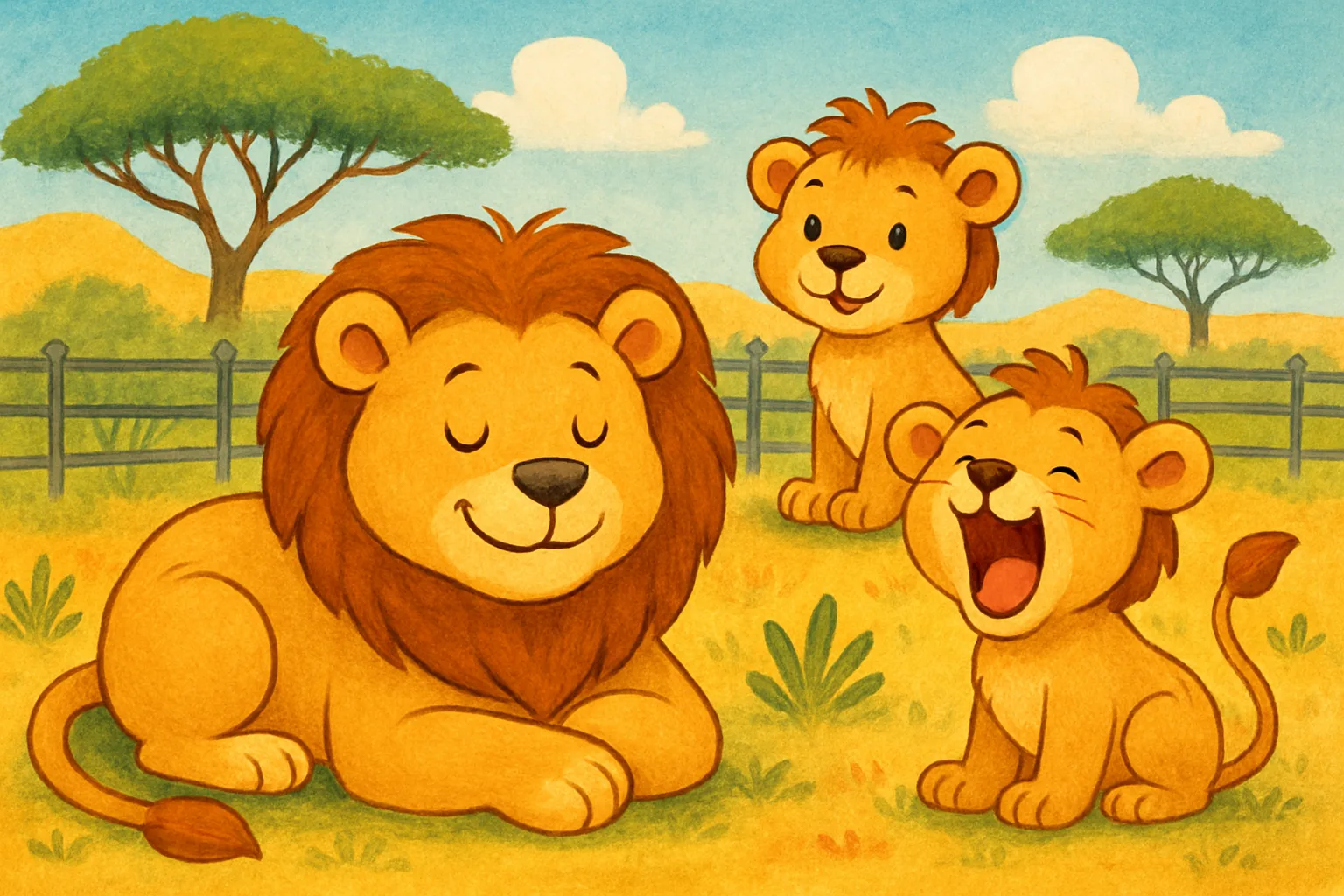
Wild at Heart! Feeding Zoo Lions Like Their Cousins in the Wild Changes Everything
Quick Summary
Researchers in Australia made a simple change to how zoo lions were fed. Instead of regular small meals, the lions got large whole meals — just like lions eat in the wild. The results were remarkable. The lions started acting much more like their wild cousins.
What Happened?
In the wild, lions do not eat at the same time every day. They hunt. They wait. When they finally catch something big, they eat a huge meal. Then they rest and digest for days before they need to hunt again.
But in zoos, lions often receive smaller, prepared portions of meat on a regular daily schedule. It keeps them fed and healthy, but it does not match the rhythm of life in the wild.
Scientists at Adelaide University in Australia and Monarto Safari Park in South Australia wanted to know: what would happen if zoo lions ate more like wild lions?
They gave a group of three adult male lions a new schedule. Every nine days, keepers provided about 200 kilograms — that is roughly the weight of a large black bear — of whole carcasses. The lions could eat from them for up to three days. Then they fasted, or went without food, for about six to seven days.
Eight infrared cameras recorded the lions around the clock for three months, taking a snapshot every few minutes. The team got one of the most detailed 24-hour records of lion behavior ever collected at a zoo.
The results were clear. On carcass days, the lions spent nearly three times longer eating than before. They tore and worked the food for long periods, just like wild lions do at a kill site. After the big meal, they rested for a long time. Then, as fasting days went on, they gradually became more active.
That up-and-down rhythm of big eating, deep rest, and slow awakening closely matched the natural cycle of lions living freely in Africa.
Lead scientist Lesia Hryhorenko summed it up: wild lions do not eat on a schedule. They feast, then fast, depending on when the hunt is successful. The zoo lions, given that same chance, fell right back into their natural rhythm.
The researchers also noted something reassuring. The lions did not become more aggressive toward each other around the big meals. The whole change went very smoothly.
Why Does It Matter?
Zoos do important work — protecting endangered animals, educating visitors, and helping with conservation research. But keeping wild animals healthy means more than just keeping them fed. It also means helping them feel natural and engaged.
This study shows that a simple change in how animals are fed can make a big difference in how they feel and behave. It could help zoos around the world give their big cats — and maybe other carnivores too — a happier, more natural life.
Big Words
- Carcass — the body of a dead animal, which predators like lions eat in the wild
- Feast-and-fast — a pattern of eating a very large meal and then going without food for a period of time, just as wild predators naturally do
- Infrared camera — a special camera that can see heat instead of just light, making it perfect for recording animals in the dark
- Carnivore — an animal that eats mostly meat; lions, tigers, and wolves are carnivores
- Animal welfare — the well-being of animals, including whether they feel healthy, comfortable, and able to behave naturally
Fun Fact
A wild lion can eat up to 40 kilograms of meat in a single meal — about the weight of an average fifth-grader! After a feast that big, it is no wonder they need several days to rest and digest.
Think About It
If you were a zookeeper, what other ways might you try to make a zoo animal’s life feel more like its natural habitat in the wild?
Sources
- Adelaide University — Zoo-housed lions show wild-style behaviours when fed whole carcasses
- ScienceDaily — Scientists changed how zoo lions eat. Their wild side came out.
- Earth.com — Feast-and-fast feeding brings out wild behavior in zoo lions
- SciTechDaily — A Simple Feeding Change Makes Zoo Lions Behave More Like They Do in the Wild
- Applied Animal Behaviour Science (2026) — Effects of implementing a whole-carcass feeding routine on the behaviour of zoo-housed African lions